
 Made in our UK lab · Next Day Delivery
Colour Blindness Explained
Published by Direct Sight | Eye Care Guide
What does 'colour blind' actually mean?
The vast majority of people with colour blindness can see colour. They just perceive certain shades differently from those with typical vision. Complete inability to detect any colour at all, known as achromatopsia, is extremely rare.
What most people experience is more accurately described as colour vision deficiency (CVD). A reduced ability to distinguish between specific colours, most commonly within the red-green spectrum.
In the UK, around three million people live with some form of colour vision deficiency. That's roughly 4.5% of the population. The condition affects men far more often than women. Approximately one in 12 men compared with one in 200 women.
Types of colour blindness
Your retina contains two types of light-sensitive cells. Rods that handle low-light vision, and cones that detect colour.
There are three types of cone cells in the eye that detect red light, green light and blue light. When all three work correctly together, you see the full colour spectrum. Colour blindness occurs when one or more of the cone types are either absent or functioning abnormally. Causing inaccurate signals to be sent to the brain about the colour being detected.
The most common form is red-green colour blindness. Protanopia is where there is an absence or weakness of red cones. Deuteranopia is where there is an absence or weakness of green cones. The most rare is tritanopia that affects blue cones leading to blue-yellow colour blindness.
What causes it?
Most cases are inherited and present from birth. Red-green colour blindness is carried on the X chromosome, which explains the gender imbalance. Men carry only one X chromosome, so a single copy of the relevant gene variant produces the condition. Women who have two X chromosomes, would need both copies to be affected, making it far less likely.
Colour vision deficiency can also develop later in life, independent of genetics. Conditions that damage the retina or optic nerve such as glaucoma, diabetic retinopathy, and age-related macular degeneration, can affect colour perception. Certain medications and exposure to some industrial chemicals are also known to impair colour vision.
Testing, diagnosis, and everyday life
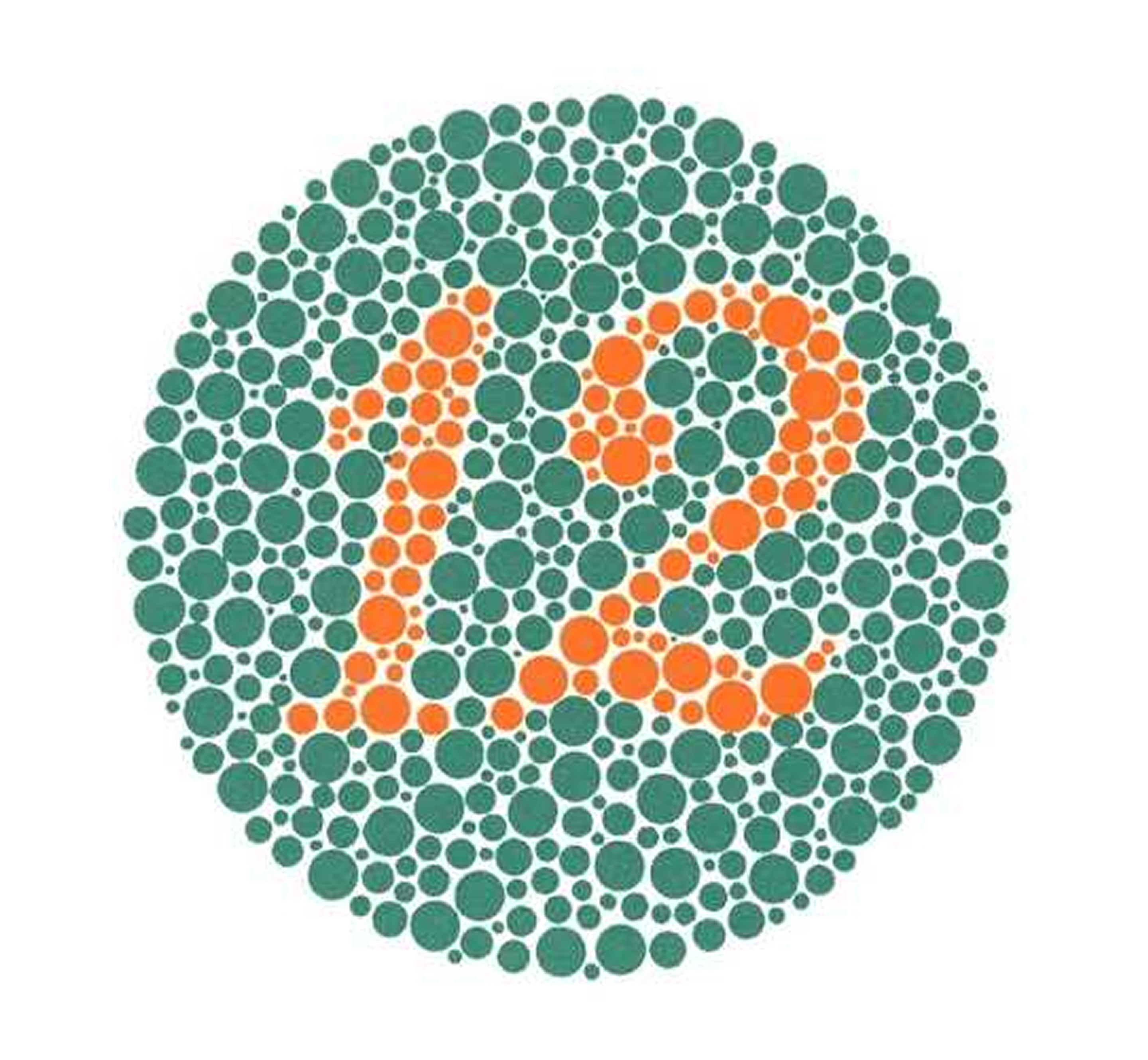
The Ishihara plate test is the most widely recognised screening tool. It uses a series of patterned circles in which numbers or shapes are embedded. Visible to those with typical colour vision but difficult or impossible to identify for those with red-green deficiencies. It is routinely carried out as part of children's eye tests and for occupational eye tests where accurate colour vision is important for safety, such as aviation and emergency services.
For the majority of people with CVD, day-to-day life is manageable. Currently there is no cure, but specially tinted lenses, available as both glasses and contact lenses, can help. These work by filtering specific wavelengths to increase contrast between problem colours. Results vary depending on the severity and type of deficiency.
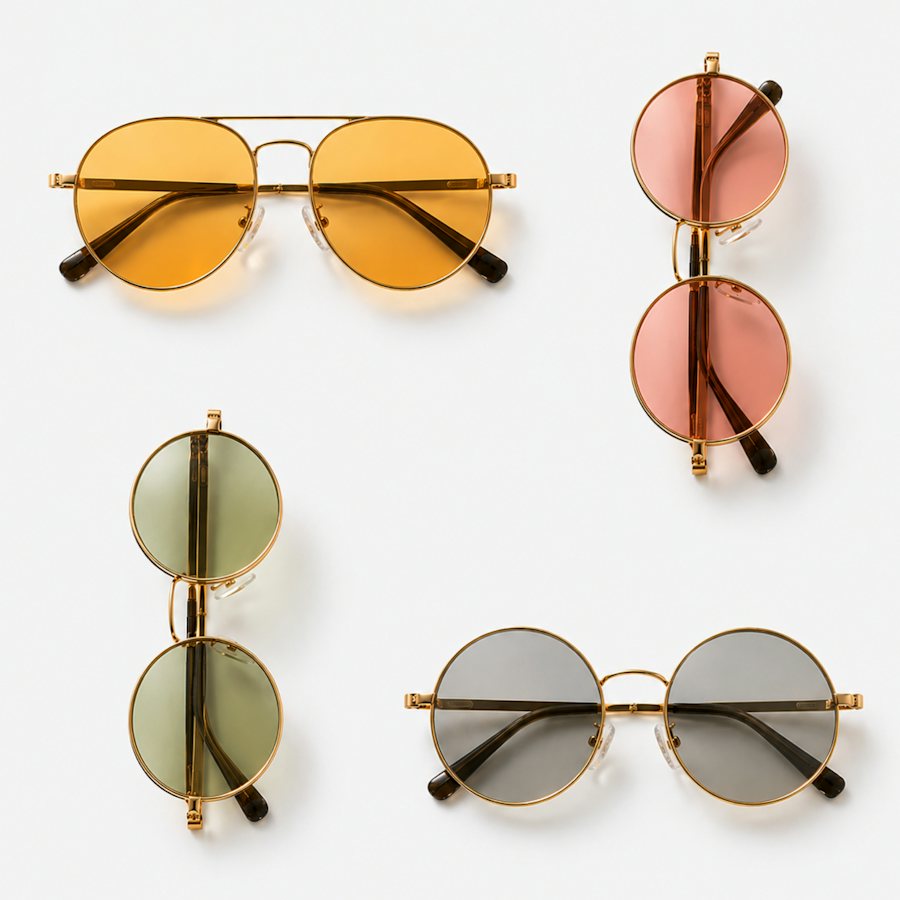
Shop glasses with a colour correcting tint
Browse our frames and customise your lenses with the tint that's right for you.
Related Categories
Frequently Asked Questions
Is colour blindness the same as seeing in black and white?
No, this is one of the most common misconceptions. The majority of people with colour blindness can see colour. What they experience is difficulty distinguishing between certain shades, most often within the red-green range. Seeing no colour at all is an entirely separate and very rare condition called achromatopsia.
Can colour blindness be cured?
There is currently no cure for inherited colour vision deficiency. Certain tinted lenses (glasses or contact lenses) can help some people distinguish colours that would otherwise appear similar, by filtering specific wavelengths. Gene therapy research is ongoing, but it is not yet a clinical option.
Is colour blindness only inherited?
No. While most cases are present from birth and inherited. Colour vision deficiency can also develop later in life as a result of eye conditions such as glaucoma, diabetic retinopathy, or macular degeneration. As well as certain medications and some toxic chemical exposures.
Can women be colour blind?
Yes, although it is much less common in women than men. Red-green colour blindness is carried on the X chromosome, women would need to inherit the gene variant from both parents to be affected. Statistically unlikely, which is why the condition is roughly 16 times more common in men. Blue-yellow colour blindness (tritanopia) affects men and women equally.
Does colour blindness affect career choices?
Some professions require normal colour vision for safety reasons. Examples including airline pilots, train drivers, and certain roles in the emergency services. However, the vast majority of careers are entirely unaffected. An optometrist can carry out testing if there is an occupational requirement, and can advise on whether a colour vision criteria may apply.
At what age should children be tested for colour blindness?
Colour vision testing is typically available as part of a routine eye examination. Once a child is old enough to engage reliably with the Ishihara plate test. Early identification is helpful, particularly to ensure appropriate support in school where colour materials are commonly used.
References
NHS, colour Vision Deficiency (Colour Blindness)
Colour Blind Awareness, about Colour Blindness
Colour Blind Awareness, causes of Colour Blindness
NI Direct (DHSSPS), colour Vision Deficiency
American Academy of Ophthalmology, how Colour Blindness Is Tested
PMC / NCBI, A Global Perspective of Color Vision Deficiency (2024)
PMC / NCBI, dyschromatopsia: Mechanisms and Treatments for CVD (2024)
Royal National Institute of Blind People (RNIB), colour Vision Deficien