
 Made in our UK lab · Next Day Delivery
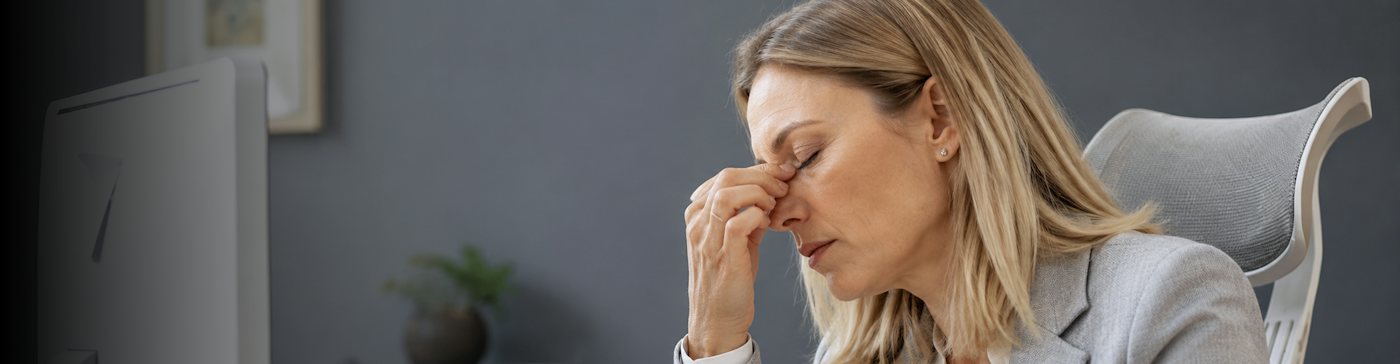
Signs That You May Need Glasses
Published by Direct Sight | Eye Care Guide
For most people, the shift is so incremental that they adjust without even realising it. Sitting closer to the television, holding their phone at an odd angle, or accepting that evening drives just feel harder these days. Recognising the early signals can make all the difference.
How vision problems develop
Refractive errors are the most common reason people need glasses. They happen when the shape of the eye prevents light from focusing correctly on the retina, causing blurred vision instead of a clear image.
Myopia
Short-Sightedness
Difficulty seeing things in the distance
Hyperopia
Long-sightedness
Difficulty focusing on close objects
Astigmatism
Blurred or distorted vision caused by an uneven curve in the cornea
Presbyopia
An age-related change that makes close-up focusing harder, usually beginning from the mid-40s onwards
| Sign | What it could mean |
|---|---|
| Blurred/hazy vision | Consistently blurry vision at any distance can be a sign of a refractive error. Occasional blur after long screen use may be tiredness, but persistent blur should be checked with an eye test. |
| Squinting to focusi | Squinting can temporarily sharpen vision, but often suggests your eyes are compensating for an uncorrected prescription. |
| Frequent headaches | Eye strain from working harder to focus can cause headaches, especially after reading, screen use, or close work. |
| Difficulty seeing in low light | Problems driving at night, halos around headlights, or slow adjustment after bright lights may indicate a vision problem such as myopia or astigmatism. |
| Holding things unusually close or far away | Holding reading material further away may suggest presbyopia, while bringing things very close may point to myopia. |
| Eye strain and fatigue | Tired, aching eyes after reading or screen use are common signs that your eyes are struggling to focus clearly. |
| Losing your place when reading | Words appearing to move or difficulty tracking text can happen when the eyes are struggling to work together properly. |
| Rubbing your eyes frequently | Frequent eye rubbing during reading or screen use can be a sign of visual fatigue or an uncorrected prescription. |
A note on children's vision
Children rarely mention vision problems, they often assume that what they see is what everyone sees. In the UK, all children under 16 are entitled to a free NHS sight test. Annual testing is recommended.
Signs to watch for include sitting too close to the television, frequently tilting the head, or struggling with reading despite apparent effort. Early detection matters: some conditions, such as amblyopia (lazy eye), are most effectively treated during childhood.
What happens at an eye examination?
An eye test with a registered optometrist is the only reliable way to establish whether you need glasses and, if so, what prescription.
The test assesses how clearly you can see at different distances. How well your eyes work together, and the health of the eye itself, including the retina and optic nerve. Many conditions that have no obvious symptoms, including early-stage glaucoma and diabetic eye changes, can be detected during a routine examination.
Adults are generally advised to have their eyes tested at least every two years. Those with an existing prescription, a family history of eye conditions, or who are over 60 should discuss more frequent testing with their optometrist. In England, NHS-funded sight tests are available to children under 16, adults over 60, those with diabetes or glaucoma, and several other eligible groups.

Shop at Direct Sight
Browse our range of frames and customise with your required lens options
Related Categories
Frequently Asked Questions
Can I need glasses even if I've always had perfect vision?
Absolutely. Vision changes throughout life, often in ways that are gradual enough to go unnoticed.
Presbyopia, for instance, affects almost everyone from around their mid-40s, regardless of whether they've ever worn glasses before. It occurs as the lens of the eye loses flexibility with age, making close focus increasingly effortful. An eye test will confirm whether your near vision has changed and whether reading glasses or multifocals would help.
Could my headaches really be caused by my eyesight?
Yes, though headaches have many possible causes and vision is only one of them. When the eyes are straining to maintain focus, particularly during close work or screen time. The sustained effort of the eye muscles can trigger tension-type headaches. Typically felt across the forehead or behind the eyes and worsening through the day.
If your headaches follow a pattern tied to visual tasks and ease when you rest your eyes, an optometrist is a sensible first port of call.
How do I know if my child needs glasses?
Children are often unable to articulate vision problems because they have no frame of reference for what 'normal' sight looks like. Look for behavioural clues like sitting very close to screens, squinting, frequently rubbing the eyes, tilting the head to one side, avoiding reading, or struggling at school despite obvious effort.
In the UK, all children under 16 are eligible for a free NHS sight test. Annual testing is the recommended standard, and there is no minimum age for assessment.
Is squinting bad for my eyes?
Squinting won't cause permanent damage, but it is a signal that your eyes are working harder than they should to produce a sharp image. As a long-term habit it can contribute to eye strain, fatigue, and the kind of persistent headaches described above. Wearing the right prescription glasses removes the need to squint entirely.
How often should adults have an eye test in the UK?
The general recommendation for adults with no existing conditions or risk factors is every two years. However, those with a personal or family history of eye conditions such as glaucoma or macular degeneration, or those over 60 may be advised to test annually. Your optometrist will recommend the appropriate interval based on your individual profile. Some groups, including adults over 60, people with diabetes, and those with a family history of glaucoma, are entitled to free NHS sight tests in England.
What is the difference between needing glasses for distance and needing them for reading?
Distance glasses correct myopia or short-sightedness. This is where the eye focuses light in front of the retina, causing distant objects to appear blurry while near vision remains relatively clear.
Reading glasses address the opposite problem, either hyperopia (long-sightedness) or presbyopia. Where the eye struggles to focus on close objects.
Many people eventually need correction for both, bifocal or varifocal lenses provide different optical powers across the lens.
References
NHS, eye Tests (Overview, Entitlements & Frequency)
NHS, short-sightedness (Myopia)
NHS, long-sightedness (Hyperopia)
NHS, presbyopia
College of Optometrists, clinical Management Guidelines
Royal College of Ophthalmologists, patient Information
RNIB, sight Loss and Vision Impairment Information
PMC / NCBI, temporal Trends in Myopia in a UK Population (UK Biobank Study)
NICE, cataracts in Adults: Management (NG77)
GOV.UK / Parliament, NHS Free Sight Test Eligibility (2025)