
 Made in our UK lab · Next Day Delivery
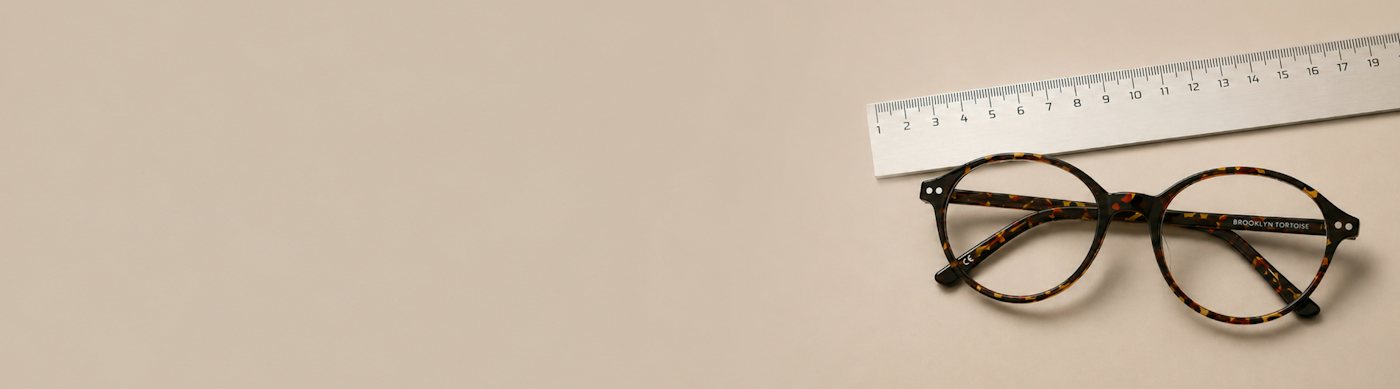
Frame Measurements
Looking for new prescription glasses but not sure on which frames will fit? This guide will help you understand how frames are measured and which will be the best frame size to fit you comfortably.
Published by Direct Sight | Buying Guide
How to measure frame size
Choosing the right frame size is essential for ensuring a perfect fit when purchasing eyewear online. Fortunately, it's easy to find the ideal size for your glasses or sunglasses with just a few simple steps!
Start by measuring a pair of glasses that you already own and feel comfortable wearing. This will give you a great reference point for selecting the right frame size.
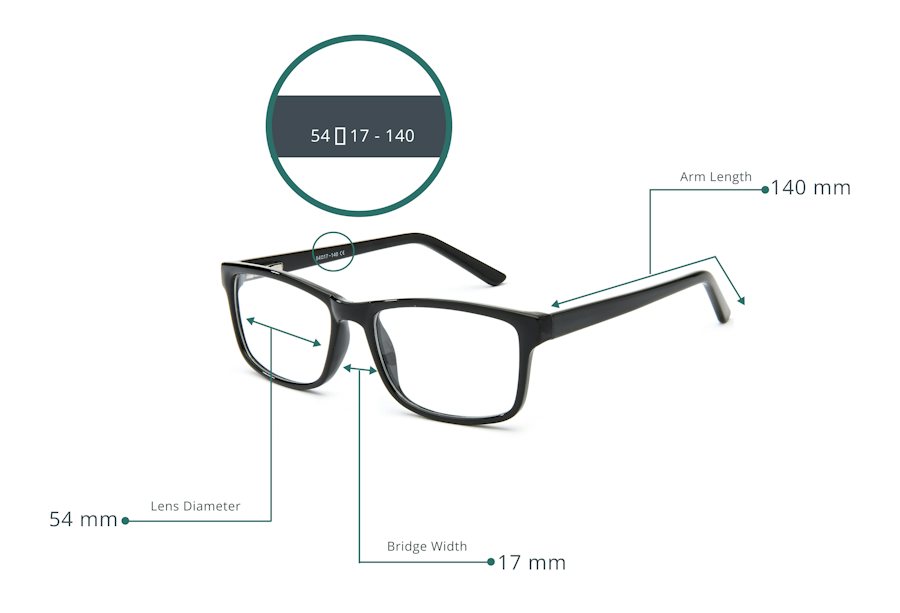
You can typically find the frame size details on the inside of the temple (sometimes referred to as the "arm" of your glasses). These measurements usually appear as three numbers separated by dashes, for example, 48-19-140. These numbers represent the specific dimensions of different parts of your frame, such as the lens width, bridge width, and temple length.
By knowing these measurements, you'll be able to select glasses that fit comfortably and suit your face shape perfectly.
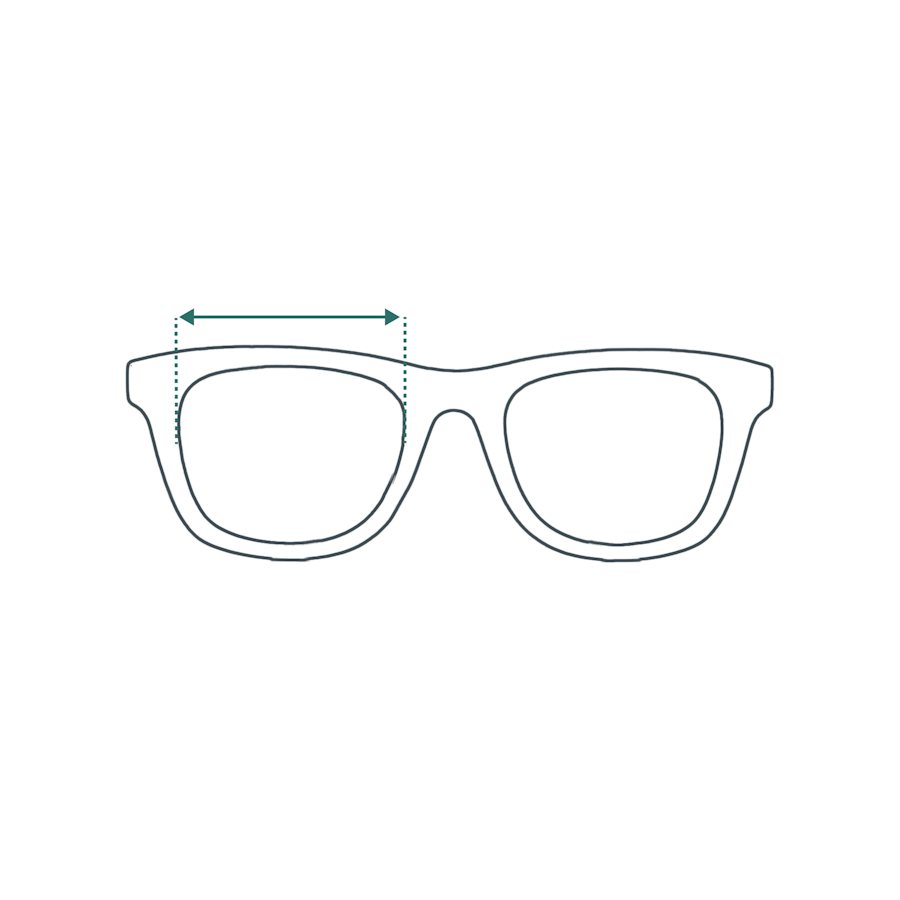
Lens Width (also called Eye Size or Lens Diameter)
Lens width is the horizontal measurement of one lens across its widest point. Not including any surrounding frame material. It is always the first number in the sequence on the inside of the arm.
Typical lens widths range from 40mm to 60mm. A lens width of 50 to 54mm is considered standard for most adult faces. Frames with wider lenses tend to create a bolder, more statement look; narrower lenses are more understated.
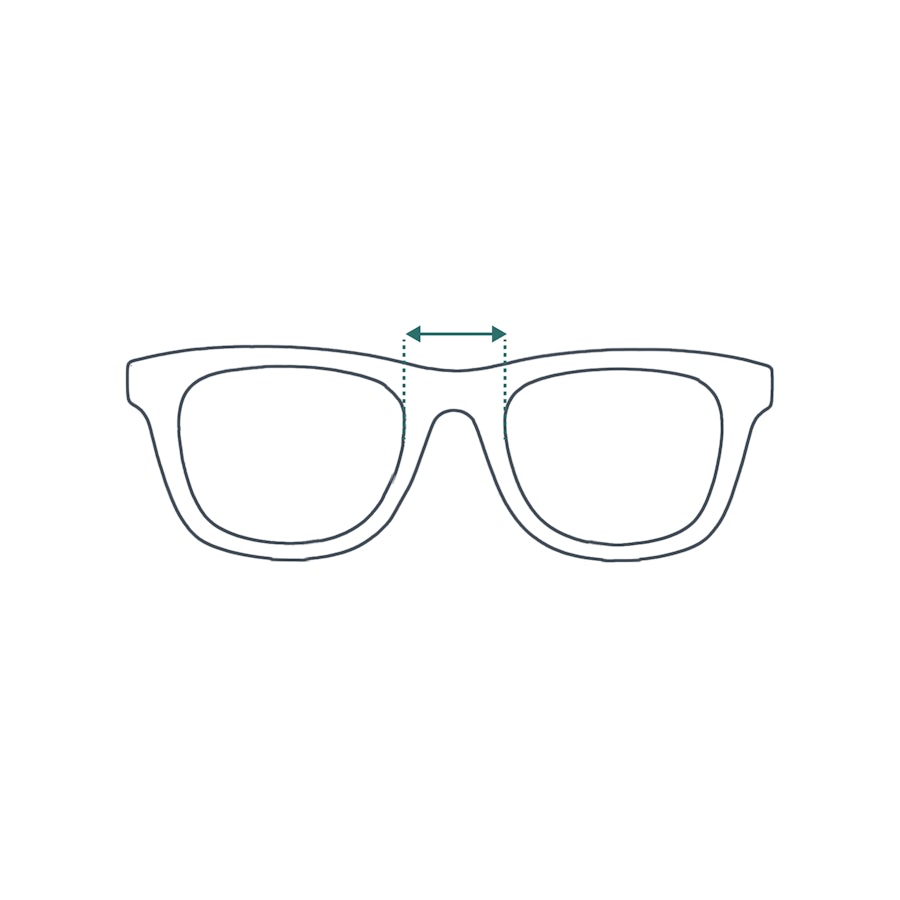
Bridge Width
Bridge width is the distance between the two lenses at their closest point, the gap that sits above your nose. It is the second number in the sequence. Typical bridge widths range from 14mm to 24mm.
The bridge is the most critical measurement for comfort at the nose. A bridge that is too narrow will pinch or dig into your nose; a bridge that is too wide will cause the glasses to sit too low or slide down.
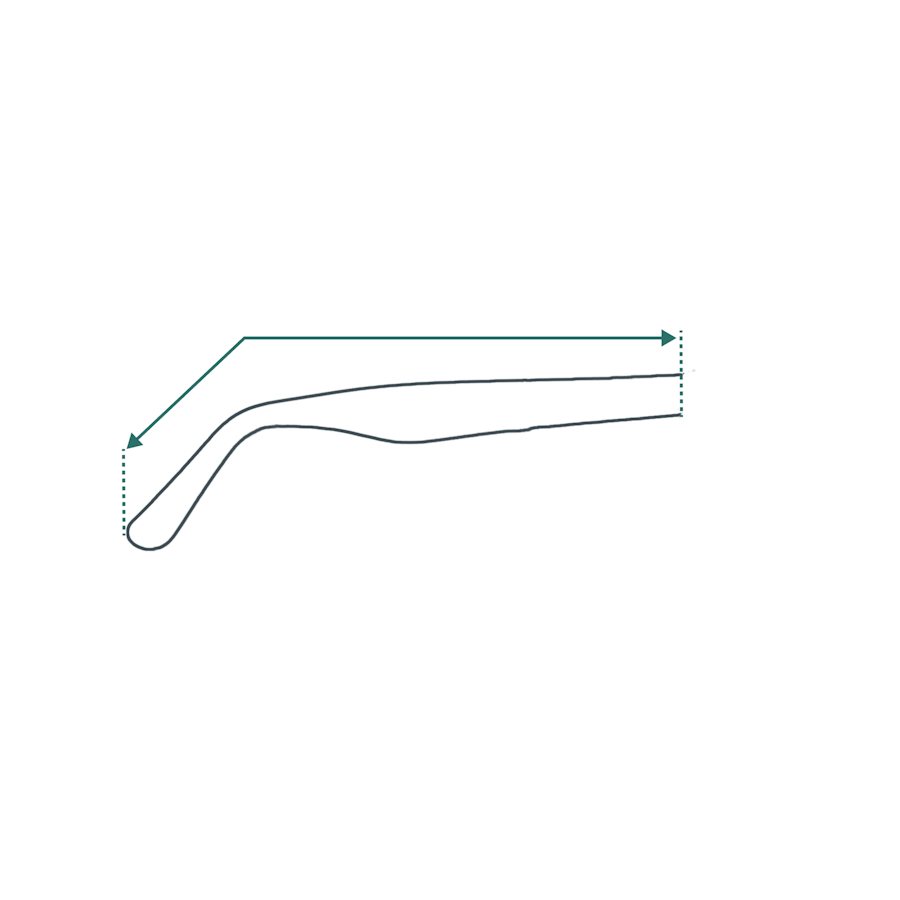
Arm Length
Arm length is the measurement of each arm (also called the temple) from the hinge where it connects to the front of the frame to the tip. This includes the curved portion that hooks behind your ear. It is the third number in the sequence on the inside of the arm.
The most common arm lengths are 135mm, 140mm and 145mm. A standard adult arm length is 140mm.Longer arm lengths (145mm or above) tend to suit larger faces or people with longer heads from front to back. Shorter arm lengths (135mm) suit smaller faces or people with shorter head depth.
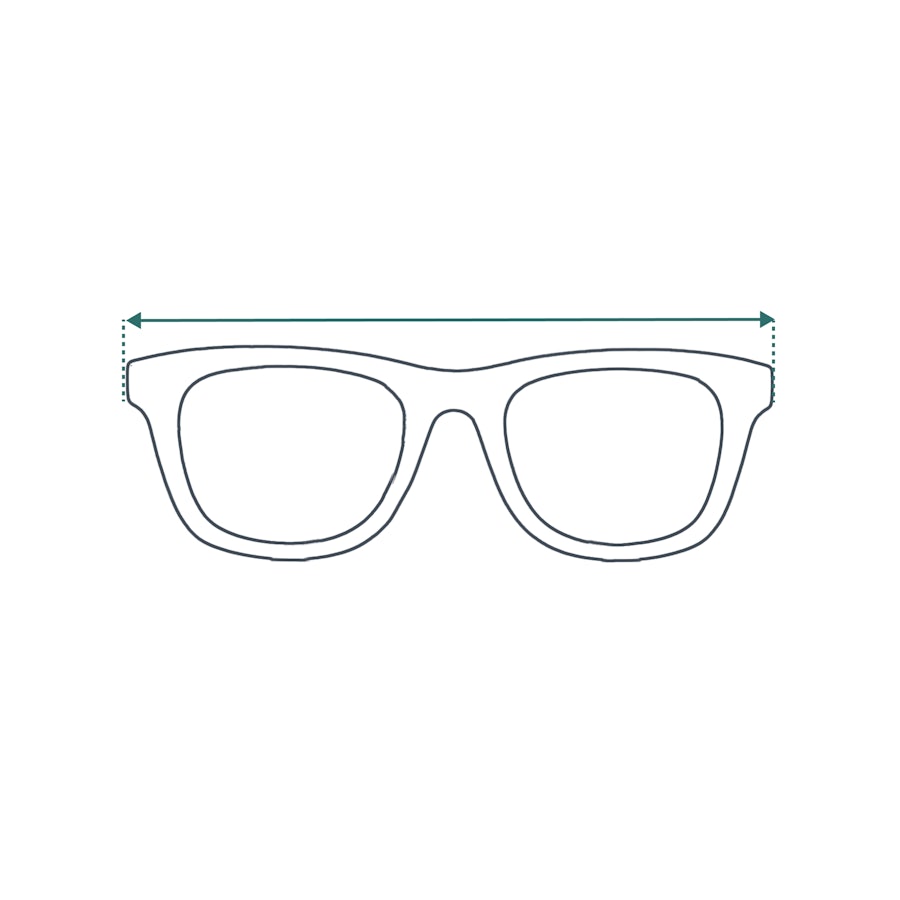
Frame Width
Total frame width is the overall width of the glasses from one outer edge to the other. This includes both lenses, the bridge, and any decorative elements at the outer edges.
As a general rule, your glasses should be roughly the same width as your face at the temples, not significantly narrower, and not wider. Glasses that are notably narrower than your face will make your face appear wider. Glasses that are notably wider will overpower your features.
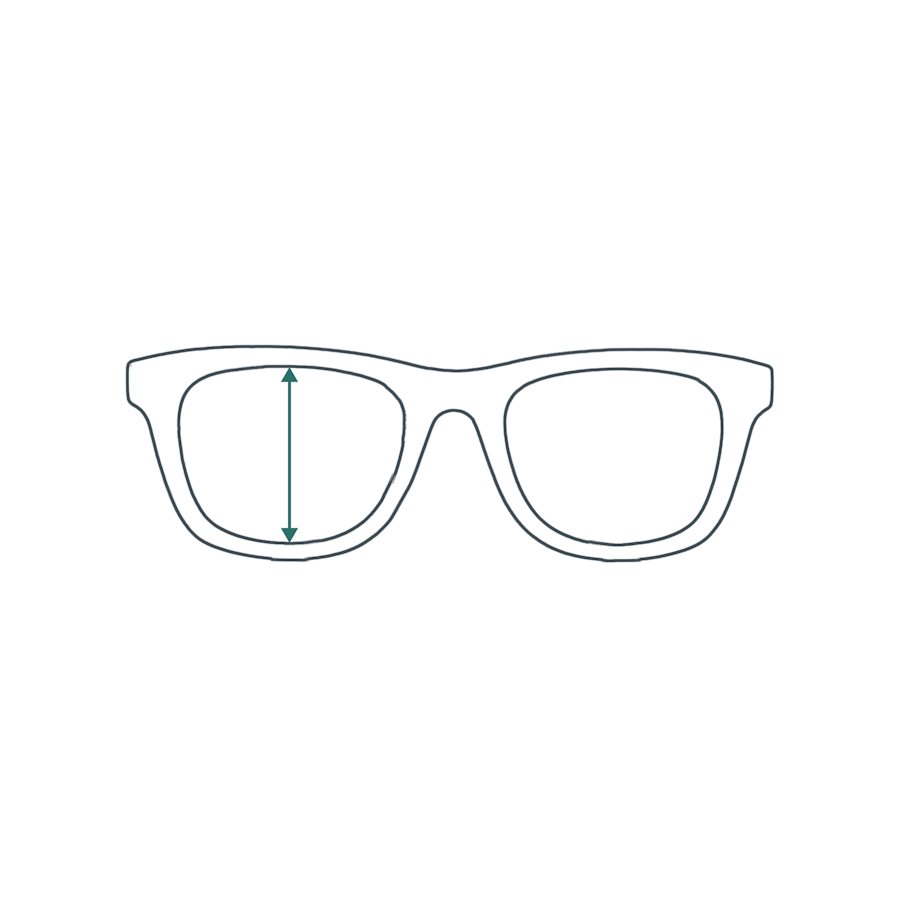
Lens Height (Lens Depth)
Lens height is the vertical measurement of the lens from its lowest to its highest point. Not always printed on the frame arm alongside the other three numbers. However, it is listed in the specifications on every Direct Sight product page.
For most single vision prescriptions, lens height is primarily a style consideration. It affects how much of your face the lenses cover and how the glasses look.
Glasses Measurements
The Direct Sight Fit Finder allows you to enter the measurements from your existing glasses. This will filter our range to show only frames in the same size. This is the fastest way to find a new pair that will fit the same way as a pair you already love.
All frame specifications are listed on every product page. If you are looking for varifocal glasses use our varifocal-compatible frame filter.
Frame fit finder
Use our Frame Fit Finder with your existing frame measurements to find your new perfectly fitting frame.
How to Measure Your Face for the Right Frame Size
If you have an existing pair of glasses that fits well use the numbers on the inside arm are your reference. If you are buying glasses for the first time, or if your current glasses do not fit well, you can measure your face directly.
Method 1, use Your Existing Glasses (Recommended)
-
Open one arm of your existing glasses and find the three numbers on the inside surface, for example, 52-18-140.
- Note the lens width (first number), bridge width (second number) and arm length (third number).
- Use our Fit Finder to filter the Direct Sight range by your measurements. Only frames in your size will appear.
- A variation of ±2mm on lens width or bridge width is generally fine. On arm length, ±5mm is acceptable. The bridge width is the most important measurement to get right for nose comfort.
Method 2, measure Your Face Directly
-
Stand in front of a mirror holding a ruler horizontally across your face at temple level, the widest point of your head, roughly level with the outer corners of your eyes.
- Measure the distance in millimetres from one temple to the other. This is your face width.
- Use the size chart below to find your recommended total frame width and typical lens width range.
- For bridge width: if you have a wider or flatter nose, start at the higher end of the bridge range (18 to 22mm). For a narrower nose, start at the lower end (14 to 18mm).
- For arm length: most adults use 140mm. If your head is particularly large, consider 145mm; for a smaller head, 135mm.
Six Signs Your Glasses Fit Correctly
A well-fitting pair of glasses distributes weight comfortably across your nose, temples and ears with no pressure points and no slipping. When checking a new pair, look for all of the following:
| Sign | What to check | Why it matters |
|---|---|---|
| Frame width matches your face | Glasses should be roughly the same width as your face at the temples, not significantly narrower or wider | Prevents pressure and ensures balanced fit |
| Top sits at the eyebrow line | The top of the frame should sit at or just below your eyebrows, not above or covering them significantly | Keeps proportions natural and avoids visual obstruction |
| Lower edge clears your cheeks | The bottom of the frame should not rest on your cheeks, even when smiling or looking down | Avoids rubbing, irritation, and discomfort |
| Bridge sits without pinching | The bridge should rest comfortably on your nose with no red marks after wearing | Prevents pain and ensures proper support |
| Arms run along the head evenly | The arms should run horizontally and curve comfortably behind your ears, not digging in or loose | Keeps glasses stable without discomfort |
| Pupils centred within lenses | Your pupils should sit roughly in the centre of each lens, not near edges | Ensures optimal vision and avoids visual strain |
If your frames slip after wearing correctly: the arm length may be slightly too long, or the arm tips need adjusting. Most glasses can be adjusted at home, see our Adjusting Your Glasses guide for step-by-step instructions. For adjustment help, call us on 01494 307 345.
Related Categories
Frequently Asked Questions
What do the three numbers on my glasses mean?
The three numbers on the inside of your glasses arm are the lens width, bridge width and arm length. If shown as 52-18-140 this means the lens is 52mm wide, the bridge (which rests on your nose) is 18mm wide, and each arm is 140mm long.
Sometimes a small square symbol (□) appears between the first and second numbers. This is simply a design convention and does not change what the numbers mean. These three measurements determine how the glasses sit on your face.
What is total frame width and how do I calculate it?
Total frame width is the overall horizontal width of the glasses from one outer edge to the other. It is the most useful single measurement for assessing whether frames will suit the width of your face.
It is not printed on the frame, but you can calculate it: total frame width = (lens width × 2) + bridge width. For a frame marked 52-18-140, the total frame width is (52 × 2) + 18 = 122mm. Your glasses should be roughly the same width as your face at the temples, within approximately 5mm either way.
What size glasses do I need for my face?
The most reliable way to find the right size is to use the measurements from an existing pair of glasses that fits well. The three numbers on the inside of the arm are your reference.
If you do not have an existing pair, measure your face width at the temples using a ruler.
As a general guide: under 120mm face width suits small frames (lens width 46 to 50mm). 120 to 130mm suits medium frames (lens width 50 to 54mm). 130 to 140mm suits large frames (lens width 54 to 58mm). Over 140mm suits extra-large frames (lens width 58mm or above).
Our Fit Finder allows you to filter by your measurements to find matching frames.
What lens height do I need for varifocal or bifocal lenses?
Varifocal and bifocal lenses require a minimum lens height of 30mm to accommodate all prescription zones. This is the vertical measurement of the lens from its lowest to its highest point, not the same as lens width.
Lens height is listed on every Direct Sight product page. Our varifocal-compatible frame filter shows only frames with sufficient depth. Frames below 30mm can technically be fitted with varifocal lenses, but the reading zone will be compressed. This would result in the lens not functioning comfortably.
What if my exact frame measurements are not available in a new frame?
A variation of ±2mm on lens width or bridge width is usually fine, you will not notice a 1 to 2mm difference in practice. On arm length, ±5mm is generally acceptable. The bridge width is the most critical measurement for nose comfort; getting this right matters more than matching the lens width exactly.
If you are between sizes, consider whether adjustable nose pads are present on the new frame. They can compensate for a bridge that is slightly wide or narrow.
Can I adjust the frame at home if the fit is not quite right?
Yes. Many glasses can be adjusted at home to improve comfort. This includes nose pad position and the bend of the arm behind the ear.
For step-by-step guidance on safe at-home adjustments, see our Adjusting Your Glasses guide. If adjustments are beyond what you are comfortable doing at home, our team are on hand to advise on 01494 307 345 or email help@directsight.co.uk.
What if my glasses do not fit when they arrive?
At Direct Sight we want you to be completely happy with your purchase. If your glasses do not fit as expected, we offer 30 day returns and one free exchange. We will remake your lenses and fit them into another frame of your choice at no extra cost.
Our customer service team is also available to advise on sizing before you order. Call 01494 307 345 or email help@directsight.co.uk. For further information please visit our returns policy.
Where can I find frame measurements on the Direct Sight website?
Frame measurements are listed for each product on each product page. You can also use our Fit Finder to filter the full range by your measurements and find frames that match your existing glasses.
What is the nose bridge size on glasses?
The nose bridge size is the distance between the two lenses, measured in millimetres. It determines how the frames sit on your nose and affects overall comfort and fit.
If the bridge is too narrow, the frames may pinch your nose, sit too high, or feel uncomfortable after prolonged wear. If the bridge is too wide, the glasses may slide down your nose or sit too low on your face.
Narrow bridge (14 to 18mm): Best for smaller or slimmer noses
Medium bridge (19 to 21mm): Fits most people
Wide bridge (22mm+): Ideal for wider or flatter noses