
 Made in our UK lab · Next Day Delivery
How to choose the right sunglasses frame
Published by Direct Sight | Eye Care Guide
Choosing the right pair of sunglasses is about more than picking a colour you like. The shape of the frame affects how balanced your features look. The lens tint changes how the world looks and how well you can see in different conditions. The material determines how the frame feels across a long day.
This guide covers all three, so you can find a pair that works for your face, your lifestyle and your budget. Written by the optical team at Direct Sight, UK dispensing opticians and lens specialists.
Sunglasses Frame Shapes, what Suits Your Face?
The most reliable starting point when choosing sunglasses is your face shape. As a general rule, frames that contrast your natural face shape, angular frames on rounder faces, softer curves on square faces. That said, the best sunglasses are the ones you feel comfortable and confident wearing, so these are guidelines, not rules.
| Face shape | Characteristic | Recommended Frame | Avoid |
|---|---|---|---|
| Oval | Balanced proportions, slightly wider cheekbones | Most styles work well - try wayfarers, aviators or oversized | Very narrow or tiny frames |
| Round | Full cheeks, similar width and length | Rectangular, wayfarer, square, browline - add angular contrast | Round or small oval frames - emphasise roundness |
| Square | Strong jawline, similar width and length | Round, oval, cat-eye - soften the angles | Very angular or boxy frames - amplify the jawline |
| Heart | Wide forehead, narrow jaw | Aviator, cat-eye, round - balance the wider forehead | Heavy frame or browline - exaggerate the forehead |
| Oblong/rectangle | Longer than wide, high forehead | Oversized, deep frames, browline - add vertical presence | Very narrow frames - elongate the face further |
| Diamond | Narrow forehead and jaw, wide cheekbones | Oval, rimless, cat-eye - flatter the cheekbones | Narrow frames - draw attention to narrow points |
The Most Popular Sunglass Shapes Explained
Understanding the differences between frame shapes makes it easier to narrow your choice quickly. Here is what makes each silhouette distinctive:

Pilot Sunglasses
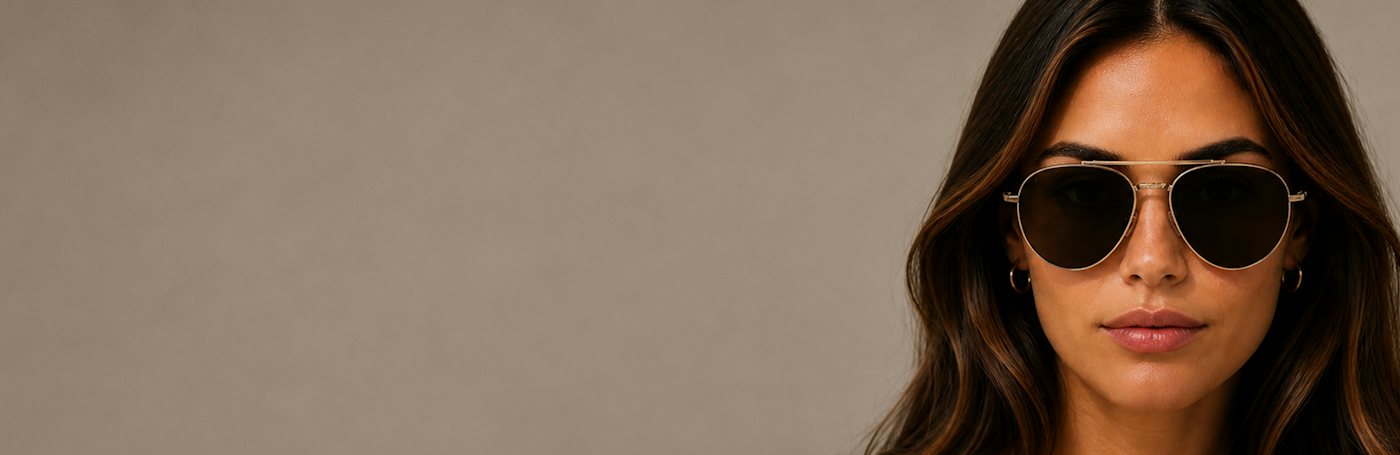
Teardrop-shaped lens with a slim metal double bridge. Originally designed for pilots to maximise visual coverage. Timeless and versatile. Works in casual, smart-casual and outdoor contexts. Suits most face shapes.
Square Sunglasses
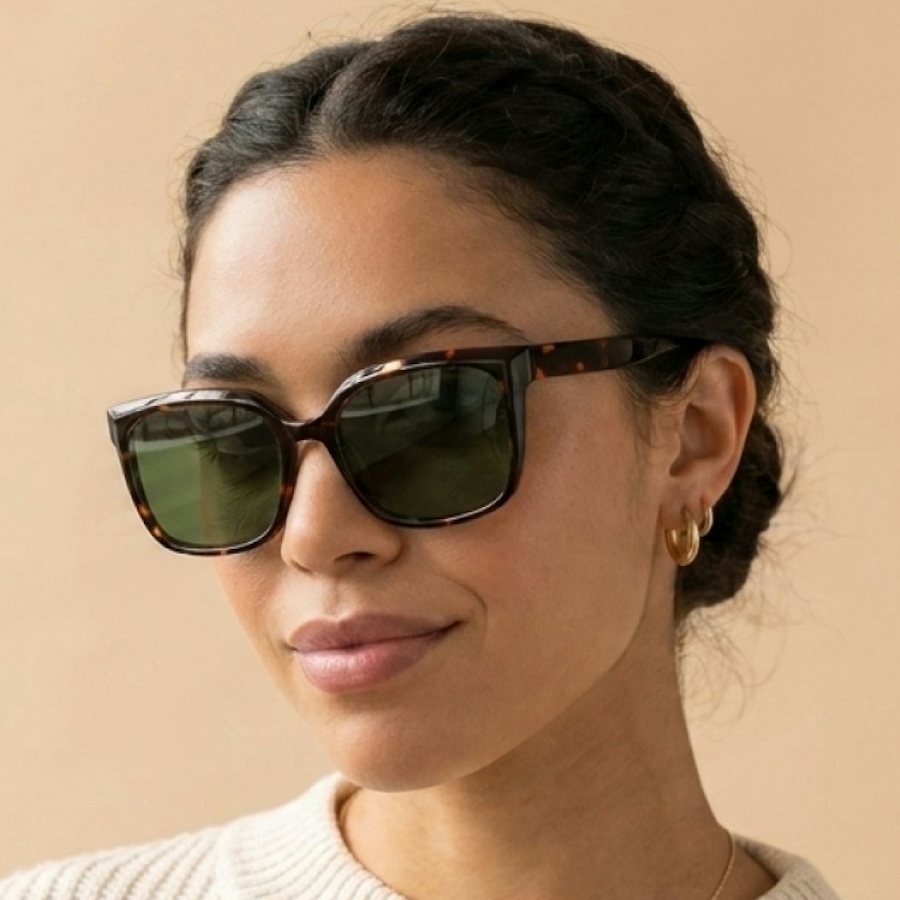
Bold, square frames, often trapezoidal acetate frame with a flat top bar. Wayfarer inspired styles have been iconic since the 1950s. Retro and confident. Strong on round or oval faces. One of the most recognisable shapes in eyewear.

Cat Eye Sunglasses
Upswept outer corners give a lifted, angular look. Available in subtle or exaggerated versions. Feminine and vintage. Excellent on round, square and heart faces. Adds lift to flatter features.
Round Sunglasses
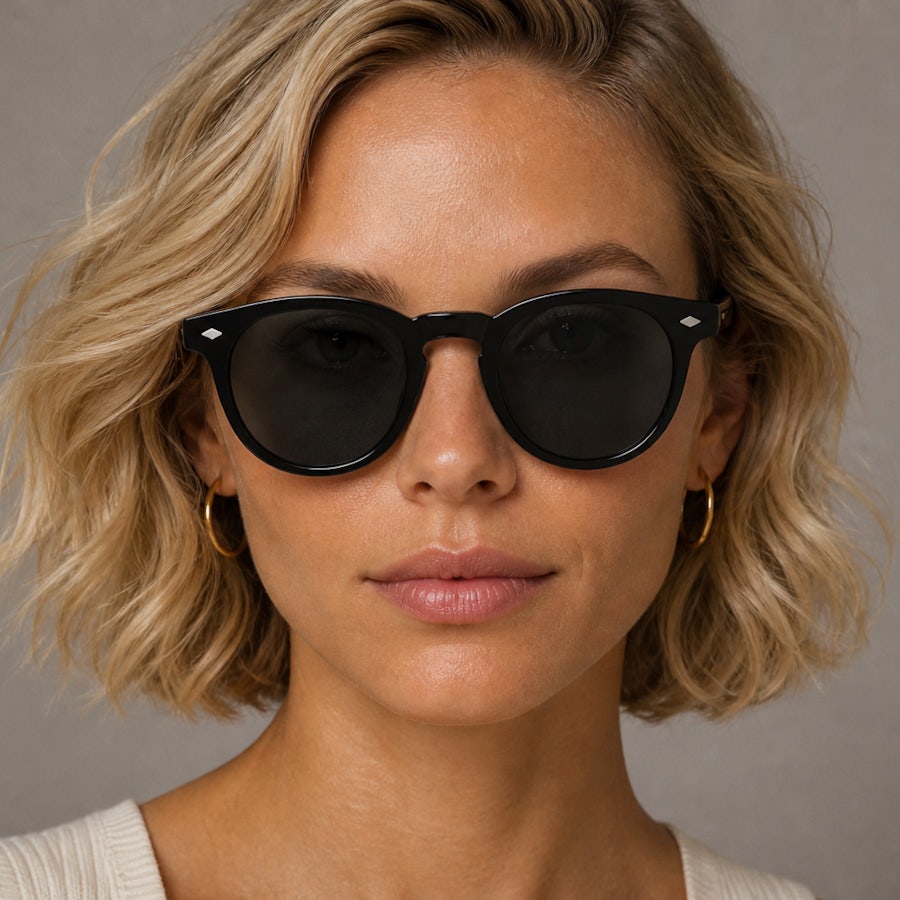
Perfectly or near-circular lens. Classic, intellectual aesthetic. Softens strong jawlines. Gives a retro or artistic look. Best on square, oblong or diamond faces.

Rectangle Sunglasses
Wide, flat lens with sharp corners. Structured and modern. Clean and contemporary. Adds angular contrast on round or oval faces. A wardrobe-friendly everyday shape.
Browline Sunglasses
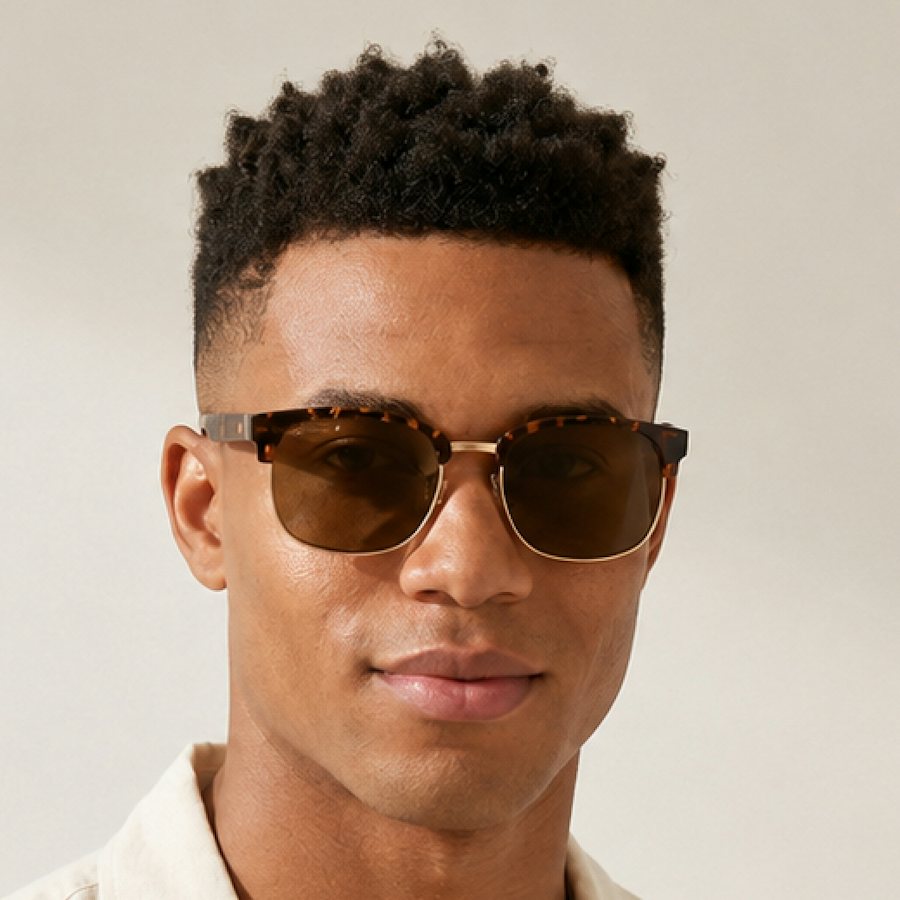
Bold, heavy upper rim with a minimal or absent lower frame. The rim mimics natural eyebrows. Confident and distinctive. Works on oval, heart and diamond faces. Gives presence without fullness.
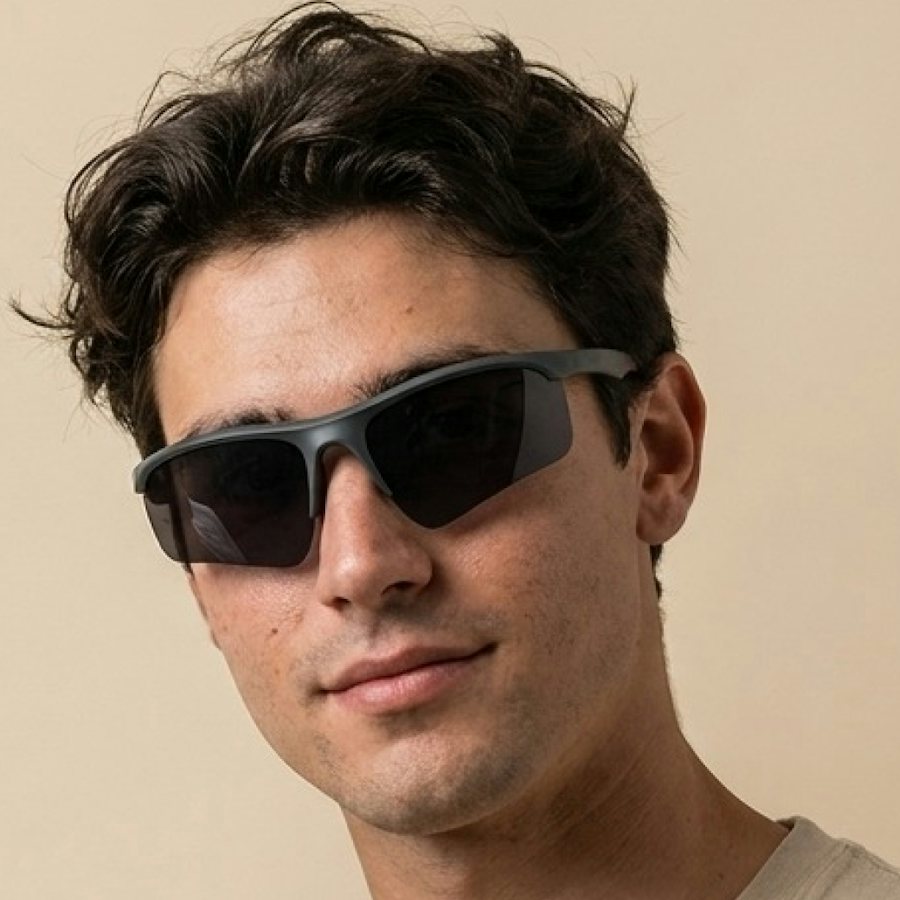
Wrap / Sport Sunglasses
Curved, close-fitting frame that follows the face. Designed to stay secure during movement. Practical and protective. Minimises peripheral light. Ideal for cycling, running, golf and outdoor activities.
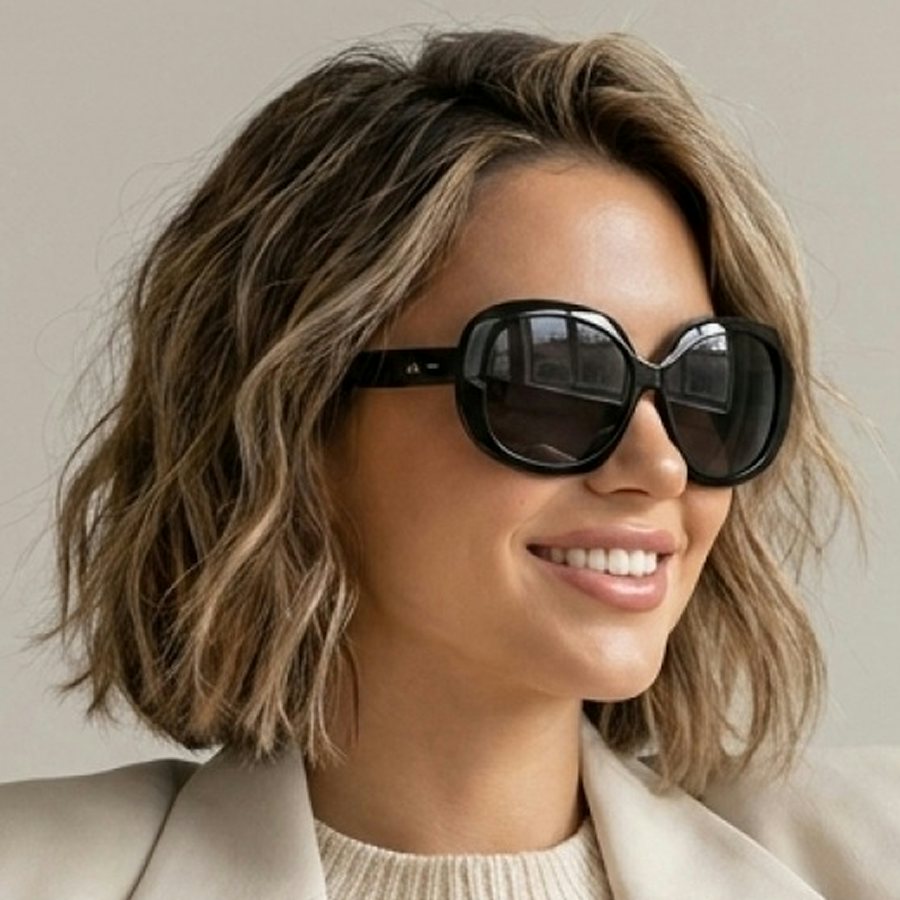
Oversized Sunglasses
Large lenses and frame that sit prominently on the face. Maximum coverage and high-fashion impact. Protective and glamorous. Works across most face shapes, especially suits smaller or finer features.
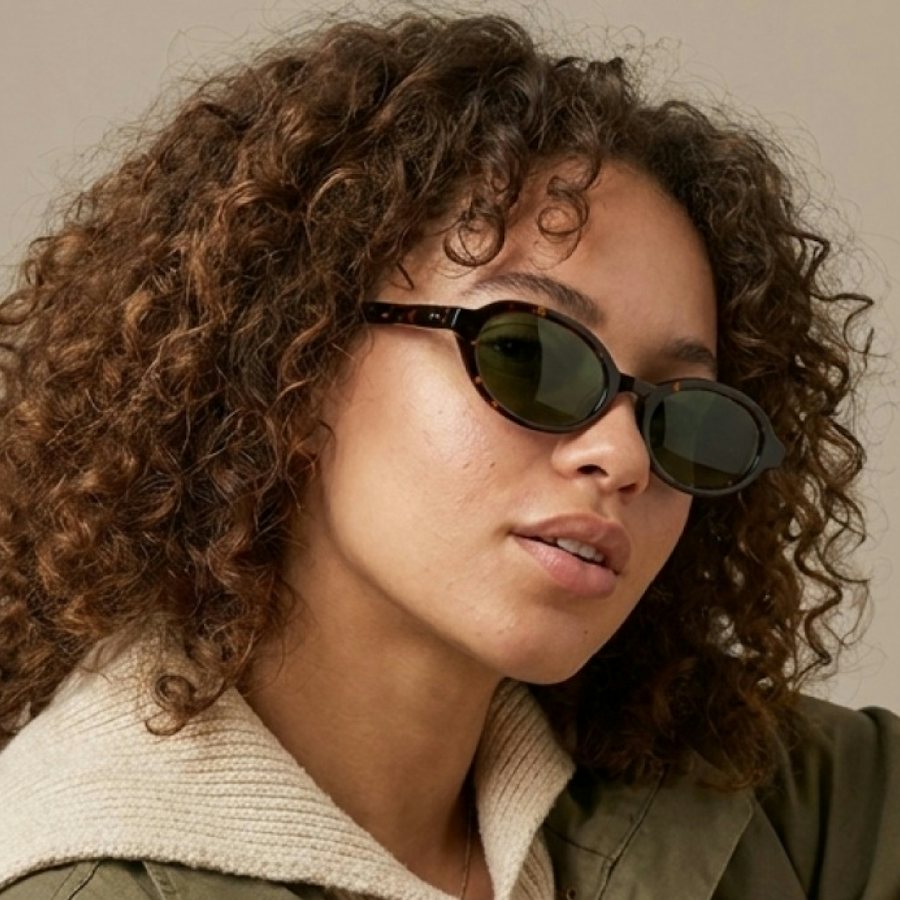
Oval Sunglasses
Soft curves, elongated lenses and a shape that's having more than a moment. Oval sunglasses sit somewhere between round and rectangular, giving you the character of a curved frame without going completely circular.
Lens Tint Colours, performance vs Style
The colour of a lens tint is not purely aesthetic, different tints perform differently depending on lighting conditions. Here is what each common tint does and when it works best:
| Tint Colour | Visual Effect | Best Conditions | Best For |
|---|---|---|---|
| Grey | Reduces brightness without shifting colours, the world looks naturally darker. | Bright general sunshine | All-purpose outdoor use, driving, holidays |
| Brown / Amber | Enhances contrast and warms colour tones. Objects appear sharper. | Variable or mixed light | Driving, outdoor sports, fishing, hiking |
| Green | Balances contrast and colour perception. Gentle on the eye over long periods. | Bright and partly cloudy days | General outdoor use, coastal and water environments |
| Mirrored | Reflective outer coating deflects intense light before it reaches the lens. | Very bright environments | Snow sports, open water, high altitude, fashion |
| Blue / Purple | Reduces glare moderately. Bold, fashionable appearance. | Mixed or moderate light | Everyday fashion, low-glare days |
| Yellow / Orange | Heightens contrast significantly in low-light. Makes objects stand out against flat backgrounds. | Overcast or low-light | Cycling, motorsport, clay shooting, skiing (flat light) |
| Rose / Pink | Softens harsh light gently. Enhances depth on green backgrounds. | Low to moderate light | Fashion, gaming, skiing, comfort in moderate sun |
Lens Tint Categories, which Darkness Is Right?
Sunglasses lenses are also graded by how much visible light they absorb, from Category 0 (almost clear) to Category 4 (extremely dark). Choosing the right category for your activity is as important as choosing the right colour:
| Category | Light Absorbed | Best Use | Driving? |
|---|---|---|---|
| 0 | 0 to 20% (clear or very pale) | Fashion, very low light, indoor/outdoor transition | Yes, effectively clear |
| 1 | 20 to 57% (light tint) | Overcast British days, indoor environments with bright windows | Yes |
| 2 | 57 to 82% (medium tint) | Variable UK weather, spring and autumn | Yes |
| 3 | 82 to 92% (dark tint) | Bright sun, beach, summer holidays, daily outdoor use | Yes, most common choice |
| 4 | 92 to 97% (very dark) | High altitude, glaciers, open water, extreme sun exposure | ⚠ Not suitable for driving |
Frame Materials, comfort, Durability and Style
The material your frame is made from affects how it feels on your face, how long it lasts and how easily it can be adjusted to fit. Here are the most common materials you will encounter when buying sunglasses:
| Material | Weight | Characteristic | Best For |
|---|---|---|---|
| Acetate | Medium | Thick, rich-looking plastic. Enormous range of colours and patterns. Can be adjusted with gentle heat. Gives frames a premium, substantial feel. | Fashion styles, wayfarers, cat-eye, bold frames |
| Metal (Stainless / Titanium) | Light | Slim, strong and durable. Adjustable nose pads for a personalised fit. Titanium is hypoallergenic and exceptionally lightweight. | Aviators, minimalist styles, daily wear |
| Polycarbonate | Very light | Synthetic material, highly impact-resistant. Excellent for active use. Less premium-feeling than acetate but very practical. | Sport, wrap frames, outdoor activities, children |
| Nylon | Light | Flexible and resilient. Maintains shape under heat and pressure. Often used in sport and performance frames. | Sport and active frames, cycling, running |
| Mixed / Hybrid | Light, medium | Combines materials, acetate front with metal temples, or metal bridge with polycarbonate lenses. Achieves specific aesthetic or functional goals. | Contemporary fashion styles |
Match Your Sunglasses to Your Lifestyle
Driving
Category 3 lens (dark but not too dark). Grey or brown tint for colour-accurate vision. Avoid Category 4, illegal for driving in UK. Avoid mirror-only tints if they distort colour.
Holiday/Beach
Category 3 for general use. Oversized or wayfarer for maximum coverage. Grey or green tint for relaxed outdoor viewing. Consider a mirror coating for high-glare environments.
Sport & Cycling
Wrap or sport frame for security and peripheral coverage. Polycarbonate or nylon for impact resistance. Yellow or amber lens in variable light; grey or brown in bright sun.
Snow & High Altitude
Category 3 or 4 for intense UV at altitude. Mirror coating to deflect glare from snow. Full-coverage or wrap frames. Note: Category 4 is not suitable for driving, keep a separate pair.
Fashion/Everyday Style
Category 2 to 3 for versatility. Any tint colour, prioritise style and fit. Acetate or mixed frame for a quality look. Choose a shape that contrasts your face shape.
Water Sports
Category 3 with mirror coating for intense reflected glare. Wrap frame to prevent loss. Lightweight, secure fit, polycarbonate or nylon. Consider polarised lenses for their superior glare elimination.
Tips for Buying Sunglasses Online
Buying sunglasses online is straightforward once you know what to look for. A few practical checks before you order:
- Check the lens category: The tint category (0 to 4) is listed on every Direct Sight product page. Confirm Category 3 or below if you plan to drive.
- Look for UV400 or CE mark: Every pair should display one of these certifications. If it does not, the UV protection is unverified.
- Check the frame width: Frame width is listed in millimetres on each product page. Compare this to your current glasses or measure the width of your face at the temples.
- Consider bridge fit: Frames with adjustable nose pads (most metal frames) offer more fit flexibility than fixed acetate bridges.
- Read the returns policy: Direct Sight offers a 30 day returns policy, so if the colour or fit is not right when you receive them, you can exchange or return with no fuss.
Related Categories
Frequently Asked Questions
What sunglasses shape suits a round face?
Angular or rectangular frames work best on round faces, they add definition and contrast to naturally soft, curved features. Wayfarers, rectangles and square frames are all strong choices. Avoid round frames, which can emphasise the roundness of the face.
What sunglasses shape suits a square face?
Round or oval frames work best on square faces, softening the strong angles of the jaw and forehead. Cat-eye shapes also work well. Avoid very boxy or angular frames, which can exaggerate an already angular jawline.
What is the most versatile sunglasses frame shape?
Aviators and wayfarers are the two most versatile shapes. Both suit most face shapes and work across a wide range of style contexts, from casual to smart-casual. Oval face shapes have the most flexibility, as almost any frame style will work well.
What lens tint is best for driving?
Grey and brown tints are the best choices for driving. Grey provides neutral colour rendering so road markings, traffic lights and signs remain natural in colour. Brown enhance contrast, which can improve visibility in variable conditions.
Both should be Category 3 lenses, dark enough for sun but not so dark as to impair visibility. Category 4 lenses must not be used for driving.
What does lens category mean on sunglasses?
The lens category (0 to 4) describes how much visible light the lens absorbs. Category 0 is very light or clear; Category 4 is very dark. This is separate from UV protection.
A lens can be Category 4 and UV400 rated, or Category 1 and UV400 rated. For everyday outdoor use in the UK, Category 3 is the most practical choice.
Which sunglasses frame material is the most durable?
Titanium is the most durable metal frame material, extremely strong, lightweight and hypoallergenic. For active use, polycarbonate and nylon frames are highly impact-resistant. Acetate frames are durable for everyday fashion use but can become brittle in extreme heat or cold over time.
What is the difference between acetate and metal sunglasses frames?
Acetate frames are made from a thick, colourful plastic and tend to have a bold, fashion-forward appearance. They are slightly heavier than metal and adjusted with gentle heat.
Metal frames (stainless steel or titanium) are slimmer, lighter. They often come with adjustable nose pads for a more comforatble fit. Aviators are usually metal; wayfarers are usually acetate.
What sunglasses are best for sport and outdoor activities?
Wrap or sport frames in polycarbonate or nylon are the best choice for active use. They stay secure during movement and are impact-resistant. For lens tint, yellow or amber works well in variable light; grey or green in bright conditions. Ensure the frame fits close to the face to minimise peripheral light and reduce the risk of losing the frame during activity.
Are mirrored lenses better than tinted lenses?
Mirrored lenses are not necessarily better. Mirrored lenses reflect intense light from the outer surface. This makes them excellent in very bright or high-glare environments like snow or open water.
Standard tinted lenses absorb light through the lens itself and are more versatile for everyday use. Both must carry a UV400 rating to provide proper UV protection.
How do I know if sunglasses will fit my face before buying online?
Check the frame width measurement on the product page. Compare this to your current glasses (the frame width is usually printed on the inside of the temple arm) or measure the width of your face at the temples. A frame that matches your face width within a few millimetres will sit naturally without pinching or sliding. The bridge width and temple arm length are also listed on each product page.