
 Made in our UK lab · Next Day Delivery

Bifocal Lenses Explained
The pro's and the con's and all lens options explined.
Published by Direct Sight | Lens Centre
What Are Bifocal Lenses?
Bifocal glasses have prescription lenses with two separate optical powers. Making them the ideal solution for anyone who needs correction for both distance and near vision. Rather than carrying two separate pairs of glasses, bifocal prescription glasses combine both corrections into a single lens.
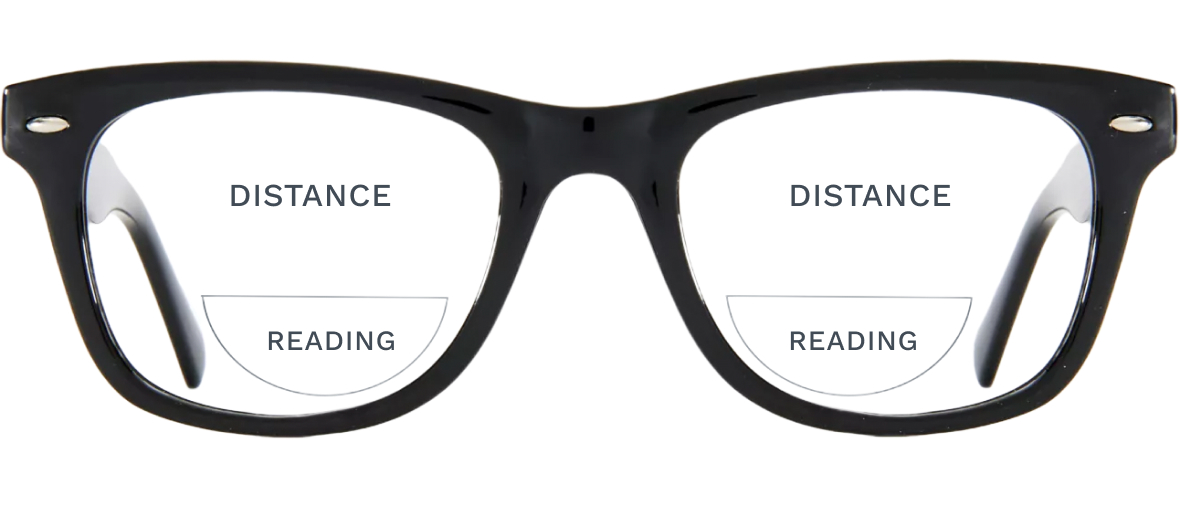
The upper portion of the lens is for distance. Perfect for driving, watching television, or taking in the view. The lower segment, bottom of the lens, known as the reading zone, is for close up tasks like reading. There is a visible line between the two parts of the lens.
Who are bifocal lenses for?
Bifocals are most commonly worn by people over 40 who have developed presbyopia. A natural, age-related condition where the eye's lens gradually loses its ability to focus at close range. They are also suitable for anyone who is tired of swapping between distance glasses and reading glasses.
How Do Bifocal Lenses Work?
The lens is physically divided into two zones. The majority of the lens, the upper and central area, contains your standard distance prescription. The lower segment contains a higher-power (known as the 'add' power), this is designed to magnify near objects. Providing comfort for activities like reading a book.
The transition between the two zones is abrupt and clearly marked by a visible line. This is a key characteristic of bifocals: there is no intermediate or mid-range zone. When you look down through the reading segment, the jump in power is immediate, giving you a sharp, stable field of near vision.
The add power is the additional lens strength applied in the near segment, measured in dioptres. A typical add power ranges from +0.75 for early presbyopia through to +3.50 for more advanced cases. Your optician will determine the correct add power as part of your eye examination.
Types of Bifocal Lenses
Bifocal lenses are available with different reading segment shapes and sizes. The segment refers to the near-vision zone. Its shape determines how the reading area sits within the lens and how wide that zone is.
D-Segment (Flat-Top) Bifocal
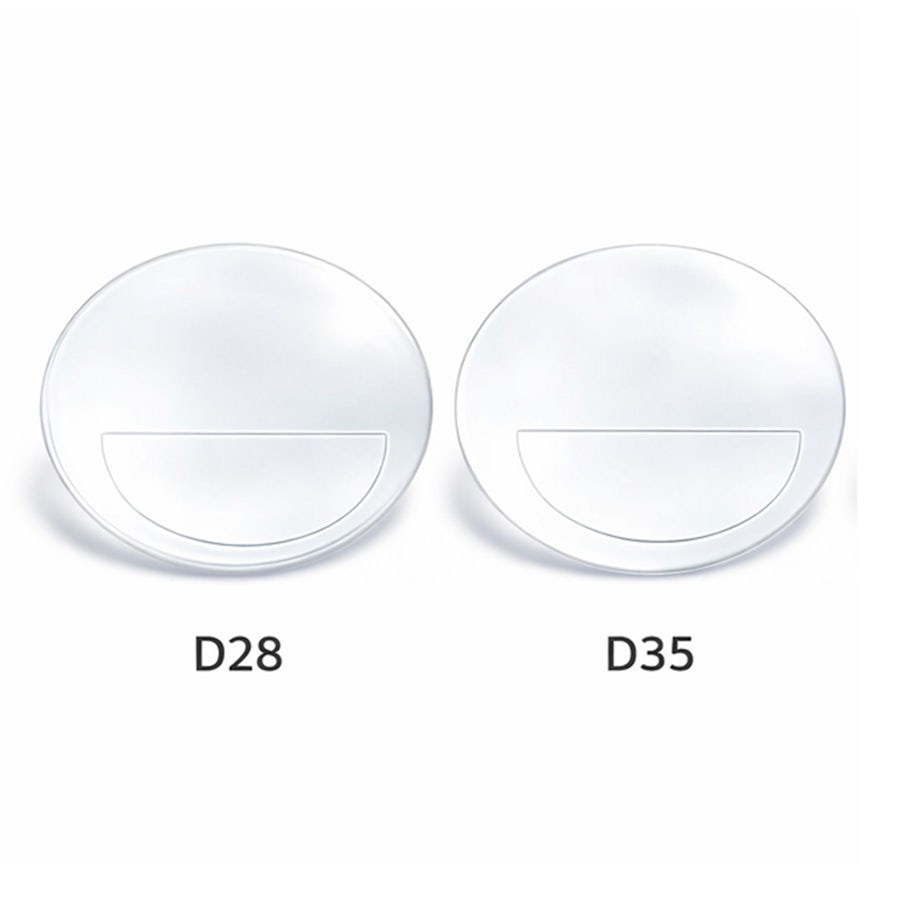
The D-segment also called a flat-top bifocal, is by far the most popular design. The reading segment is shaped like the letter D rotated on its side, with a flat edge at the top. Creating a clean, horizontal dividing line. The two most common widths are 28 mm (D28) and 35 mm (D35).
Round Segment Bifocal
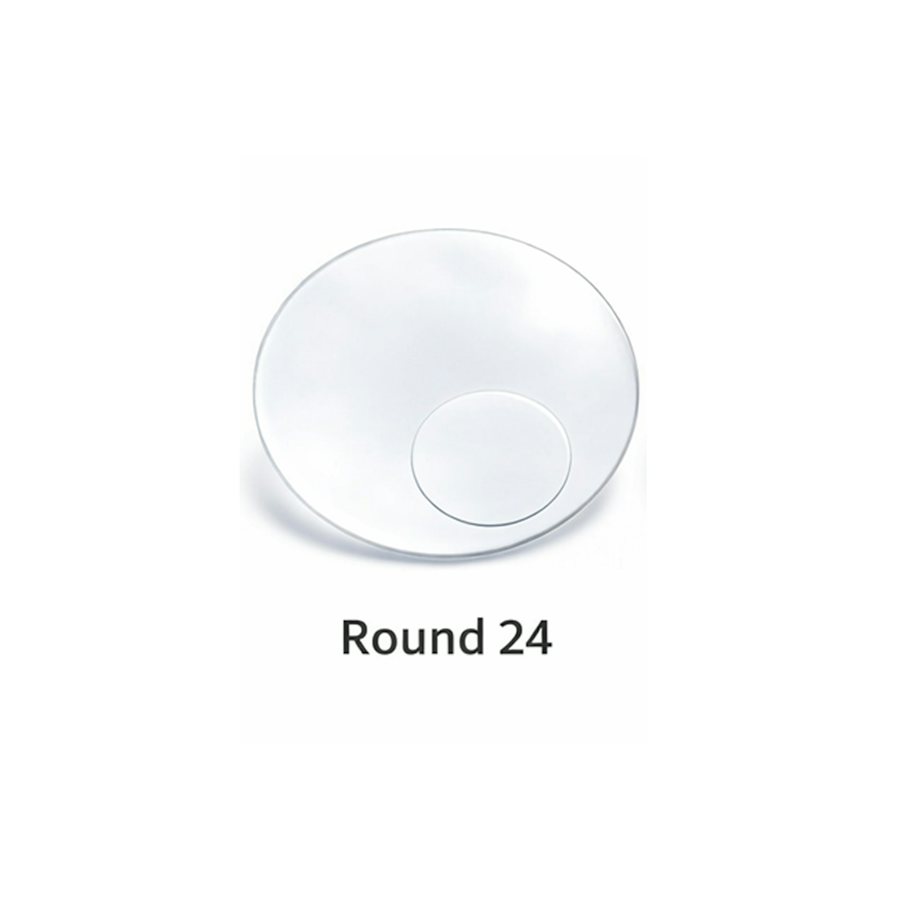
The round segment has a circular near-vision zone. This design was historically popular because the rounded shape makes the segment less visually obvious in the lens. But it provides a narrower usable reading area at the top of the segment compared to a D-segment.
Executive (Full-Width) Bifocal
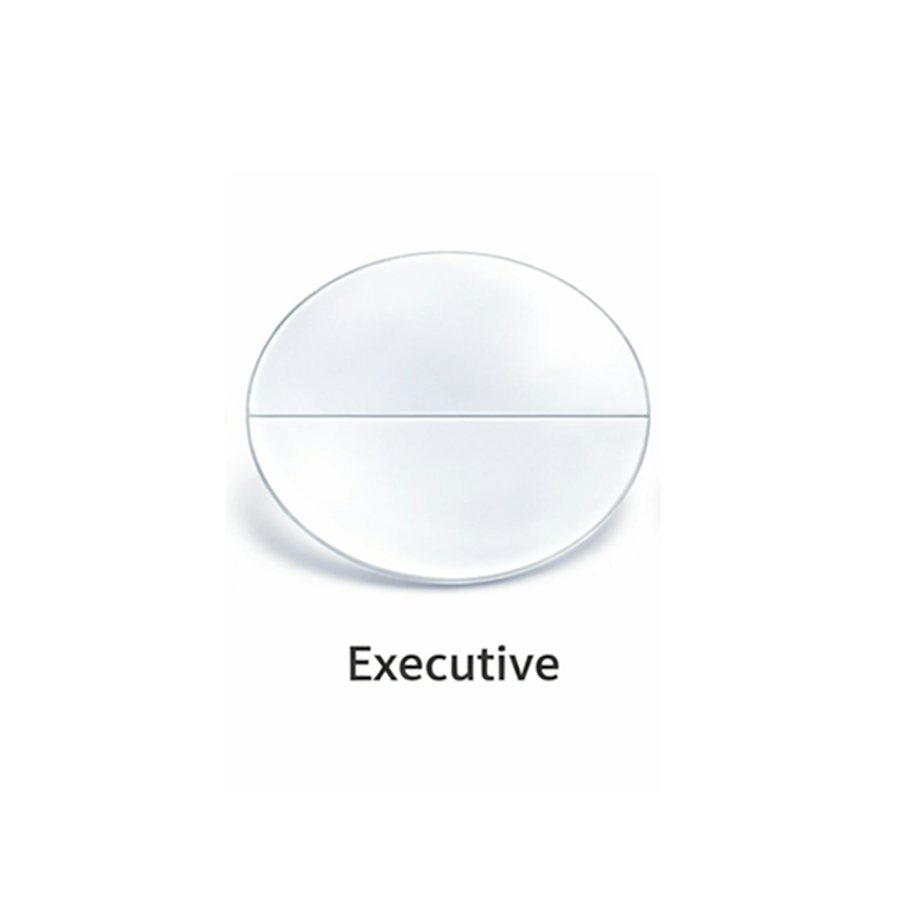
The executive bifocal, sometimes called the Franklin style, has a reading segment that spans the full width of the lens from edge to edge. This gives the widest possible near-vision area but creates the most visible dividing line. It is less commonly used today.
The D28 Bifocal Lens, Direct Sight's Standard Bifocal
The D28 is the most widely used bifocal lens design in the UK and the lens that Direct Sight supplies as standard. If you are new to bifocals or unsure which type is right for you, the D28 is the natural starting point.

Why the D28 Is the Most Popular Bifocal
The 28 mm width of the D-segment strikes an effective balance. It is wide enough to give a generous, comfortable reading zone. While remaining compact enough that the segment does not dominate or affect peripheral vision below the eye-line. This matters when you are walking, using stairs, or navigating any uneven ground.
The flat top of the segment creates a clean, well-defined boundary between the distance and near zones. Many wearers find this clarity helpful, there is no confusion about which part of the lens to look through. You look ahead for distance, you look down for reading. The zones are distinct and reliable.
The Visible Line
The D28 has a visible dividing line, this is inherent to the bifocal design. It appears as a fine horizontal mark across the lower portion of the lens. Some people are self-conscious about this, and prefer progressive lenses.
Adjusting to the D28
Most people adapt to bifocal lenses within a few days to two weeks of consistent wear. During this period, you may notice:
- A slight 'image jump' when your eyes cross the dividing line between zones
- Mild difficulty judging the height of steps, kerbs, or uneven ground initially
- A brief period of needing to consciously position your head to use each zone
Frame Compatibility
D28 bifocals require frames with enough lens height (typically at least 28 to 30 mm) to accommodate both distance and reading areas. If you’re unsure about suitability, the Direct Sight team can help.
Bifocal lenses are available from Direct Sight from £35.00, they an affordable way to achieve clear vision at both distances in one pair of glasses.
Benefits and Disadvantages of Bifocal Lenses
| Benefits of Bifocal Lenses | Things to be aware of |
|---|---|
|
One pair for distance and near vision |
No intermediate (mid-distance) zone |
Who Benefits from Bifocal Glasses?
Readers & Hobbyists
Reading enthusiasts, musicians reading sheet music, and craft hobbyists appreciate the generous D28 reading segment for extended close-up work.
Budget-Conscious Wearers
Those looking for cheap bifocal glasses online without compromising on quality will find our D28 lenses from £35.00 represent exceptional value versus varifocal alternatives.
First-Time Bifocal Buyers
With our free lens exchange policy and 365 day guarantee, buying bifocals online for the first time carries zero risk. If you can't adjust, we'll swap your lenses at no cost.
Presbyopia Sufferers
Presbyopia, the age-related loss of near-focus ability, is the most common reason people buy bifocals online. Bifocal prescription glasses restore both reading and distance clarity in one pair.
Office & Desk Workers
People who alternate between reading documents and looking across the room find bifocal glasses a convenient single-pair solution for the working day.
Drivers
The broad distance zone in bifocal glasses provides clear, unobstructed distance vision for driving. While the reading segment assists with dashboard dials and maps when needed.
Lens Coatings and Options
D28 bifocal lenses can be enhanced with a range of coatings and tints to improve clarity, comfort, and durability. Options include anti-reflection coatings to reduce glare. Scratch-resistant hard coatings. UV protection for eye health, and tinted finishes for prescription sunglasses.
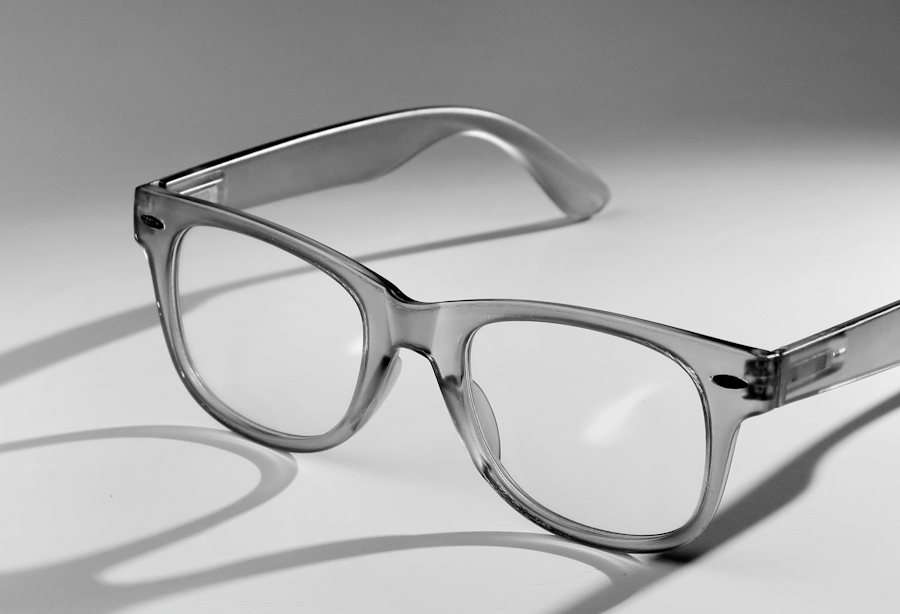
Direct Sight Bifocal Glasses
Customise your chosen glasses frame with bifocal lenses from only £35.
Related Categories
Frequently Asked Questions
What are bifocal lenses?
Bifocal lenses are prescription lenses that combine two vision corrections in a single lens. The upper part of the lens corrects distance vision, while a segment in the lower portion corrects near vision for tasks like reading. They are one of the most common solutions for presbyopia, the age-related loss of near-focusing ability.
How do bifocal lenses work?
A bifocal lens contains two distinct prescriptions separated by a visible dividing line. When you look straight ahead, you see through the distance portion.
When you look downwards, to read, check your phone, or look at nearby objects. Your eyes naturally use the near-vision segment at the bottom of the lens. The transition between zones is immediate and clearly defined.
What is a D28 bifocal lens?
A D28 bifocal is the most popular type of bifocal lens. The name refers to the D-shaped reading segment, which measures 28 mm across.
The flat top of the D creates a clean horizontal dividing line between the distance and near zones. The 28 mm width gives a wide, comfortable reading area while still allowing good peripheral vision below the eye-line. Direct Sight supplies the D28 bifocal as standard, from £35.
Are bifocal lenses the same as varifocal lenses?
No. Bifocal lenses have two fixed zones, distance at the top and near at the bottom. With a visible dividing line between them and no intermediate (mid-range) zone. Varifocal or multifocal lenses offer a gradual transition through distance, intermediate, and near zones with no visible line. Direct Sight has a dedicated guide varifocal vs bifocal lenses to help you compare.
How long does it take to adjust to bifocal glasses?
Most wearers adapt to bifocal lenses within a few days to two weeks of consistent wear. During the adjustment period, you may notice a slight 'image jump' as your eyes cross the segment boundary, or temporary difficulty judging the height of steps and kerbs. Wearing the glasses consistently, rather than switching back to your old lenses, is the best way to speed up adaptation.
Can I wear bifocal glasses all the time?
Yes. Bifocal lenses are designed for full-time everyday wear. Covering distance tasks such as driving and walking as well as near tasks such as reading and screen use. Wearing them consistently also helps your eyes adapt to the two zones more quickly.
What is the visible line in bifocal glasses?
The visible line in bifocal glasses marks the boundary between the distance and near-vision zones. In a D28 bifocal, this appears as a fine horizontal line across the lower portion of the lens. While it is a defining characteristic of bifocal lenses, many wearers find it far less noticeable to others than they initially expected.
Do bifocal lenses correct astigmatism?
Yes. Bifocal lenses can incorporate a correction for astigmatism (a cylindrical prescription component) in both the distance and near zones. Your optician will include any astigmatism correction as part of your bifocal prescription.
What frames are suitable for bifocal lenses?
Bifocal lenses require a frame with sufficient lens depth, of at least 28 to 30 mm, to accommodate both the distance zone and the reading segment. Very shallow or rimless frames may not be suitable. All frames listed on our Bifocal Glasses page are suitable for bifocal lenses.
How much do bifocal lenses cost?
At Direct Sight, D28 bifocal lenses are available from £35. Making bifocals one of the most affordable multifocal lens options. Pricing may vary depending on lens index, coatings, and the frame selected.
Can I get bifocal sunglasses?
Yes, bifocal lenses can be tinted for use as prescription sunglasses. Options include sun tints, polarised lenses, and photochromic (light-reactive) lenses. Note that tint and material options may be more limited for bifocal lenses than for single-vision lenses. Contact Direct Sight to confirm availability for your prescription.
Do bifocal lenses make your eyes worse?
No. Bifocal lenses do not cause your vision or presbyopia to worsen. Presbyopia progresses naturally with age regardless of the lenses you wear. Bifocals simply provide a practical correction for the condition and have no effect on the underlying physiology of the eye.