
 Made in our UK lab · Next Day Delivery
Blue Light Lenses Explained
Protect Your Eyes. Sleep Better. See Clearer.
The Blue Light Spectrum - What Is Blue Light?
The Blue Light Spectrum
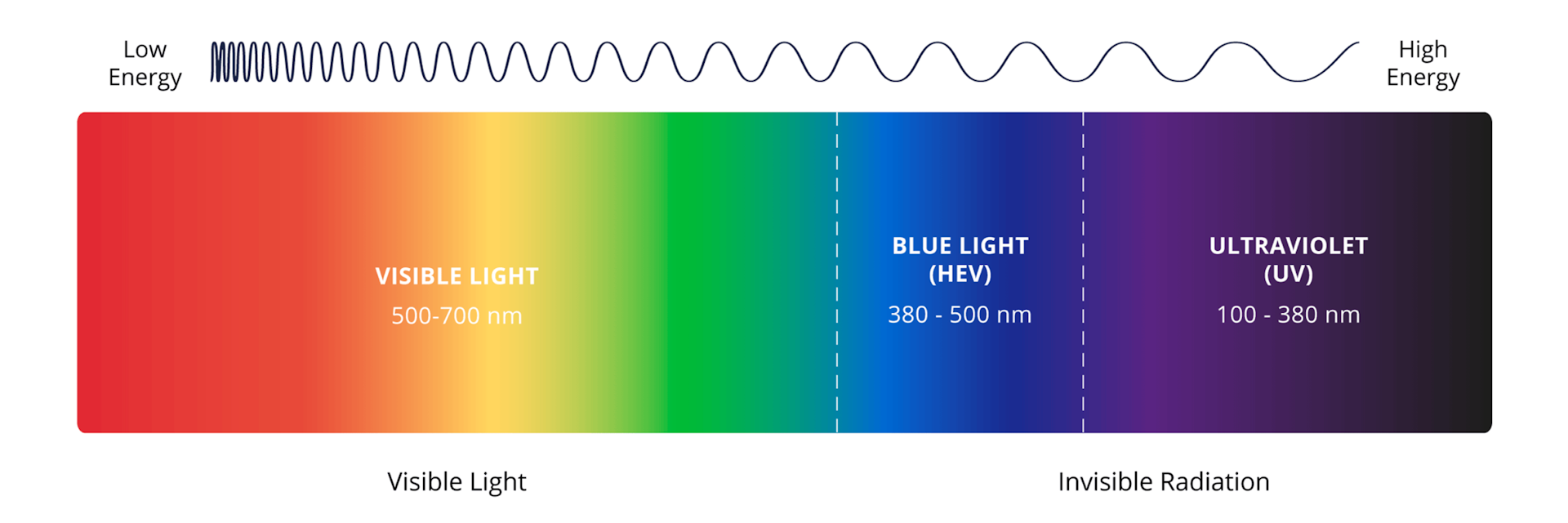
Blue light is a high-energy type of visible light, found within the 380 to 500nm range, with the most intense portion between 415 to 455nm. It is emitted naturally by the sun (the strongest source) and by devices such as smartphones, tablets, laptops, computer screens, and televisions.
While blue light exposure during daylight hours is natural and beneficial. Prolonged exposure from digital screens (especially in the evening) can contribute to digital eye strain, disrupted sleep, and long-term eye fatigue.
Not all blue light is equal.
Within the blue light spectrum, different wavelengths affect the body in different ways:
- Blue-violet light (415 to 455nm): This high-energy range is most strongly linked to digital eye strain and the suppression of melatonin, the hormone that regulates your sleep-wake cycle.
- Blue-turquoise light (460 to 500nm): This range plays an important role in maintaining alertness, supporting mood, and regulating healthy circadian rhythms during the day.
This distinction is important. Many low-quality blue light glasses use heavy yellow or amber tints that block the entire blue spectrum indiscriminately. They reduce beneficial light as well as the harmful portion and often causing noticeable colour distortion.
Our blue light blocking glasses are designed with a selective optical coating that targets the 415 to 455nm range specifically. Filtering harmful high-energy light before it reaches your eyes, while not blocking beneficial wavelengths, maintaining natural colour clarity.

Why is blue light harmful?
Spending long hours on digital devices can leave you with headaches, tired eyes, or difficulty sleeping. These symptoms are commonly linked to digital eye strain, a condition caused by extended screen use.
High levels of screen time can put continuous demand on your eyes, leading to discomfort, blurred vision, and fatigue. It can also interfere with your ability to wind down at night, making it harder to fall asleep and maintain a healthy sleep routine.
BluEase™ blue light glasses are designed to help reduce digital eye strain and minimise the effects of blue light from daily screen use. By filtering targeted wavelengths, they support more comfortable viewing and better sleep quality, especially for those who spend several hours a day on screens.
BluEase™ Blue light lenses from Direct Sight
70 to 80% Blue Light Blocking
Blocks 70 to 80% of harmful blue light in the 415 to 455nm range, the most damaging part of the blue light spectrum.
HMC Anti-Scratch & Anti-Glare
Hard multi-coat (HMC) provides durable anti-scratch and anti-glare protection for long-lasting clarity.
EMI Antistatic Coating
Electromagnetic interference (EMI) coating provides antistatic protection and defence against radiation.
UV Protection to 400nm
Full UV400 protection shields your eyes from ultraviolet light, inside and outdoors.
Hydrophobic Coating
Water and oil-repellent coating makes lenses easier to clean and keeps them clearer for longer.
All-Day Comfort
Safe to wear all day, every day, with or without a prescription. Will not affect your vision or eye health.
BluEase™ vs Yellow-Tinted Blue Light Lenses
Clear Lenses, Genuine Protection
Many lower-cost blue light glasses options, achieve their filtering effect through a yellow or amber pigment. This approach does block blue light, but the tint shifts colour perception. They can make screens look warmer or washed out, and looks visibly off-colour in professional or social settings.
Direct Sight's BluEase™ blue light blocking lenses use a precision optical coating applied to the lens surface. This targets the harmful 415 to 455nm blue-violet range at a wavelength level your eye doesn't register as a colour change. The result:
- Lenses appear virtually clear in everyday use
- No significant colour shift on screens or in your surroundings
- Suitable for the office, client meetings, or any setting where tinted lenses would be conspicuous
- The optical coating is durable and scratch-resistant as part of the HMC multi-coat, not an afterthought
Recognising Digital Eye Strain
Digital eye strain, also called computer vision syndrome, is a set of eye and vision problems caused by prolonged screen use. Common symptoms include:
- Dry or irritated eyes, often caused by reduced blinking during screen focus
- Blurred or double vision after sustained close-up screen use
- Headaches, particularly behind the eyes or at the temples
- Difficulty refocusing, especially switching between screen and distance
- Neck and shoulder tension, which frequently accompanies visual strain from poor screen positioning
Eye strain has multiple causes, including screen brightness, lighting, viewing distance, refresh rate, and how often you take breaks. BluEase™ lenses help reduce blue light, but combining them with good screen habits gives the best results.
If your eye strain is ongoing or severe, it’s best to have your prescription checked by an optometrist.
The 20-20-20 Rule
Give Your Eyes a Break
Blue light glasses work best as part of a broader approach to screen health. One of the simplest and most effective additions to your routine is the 20-20-20 rule:
Every 20 minutes of screen time, look at something at least 20 feet away for at least 20 seconds.
This gives the ciliary muscles inside your eye, which contract constantly to maintain close focus, a chance to relax. A simple habit that can make a meaningful difference to end-of-day eye comfort. Especially when combined with blue light filtering lenses.
Who Benefits Most from Blue Light Lenses
Remote Workers & Office Professionals
Six to ten hours of daily screen exposure is now routine for many desk workers. Daily exposure adds up quickly. Blue light filtering provides an accessible first line of defence against the end-of-day fatigue that comes with sustained screen use.
Students
Extended research and reading on screens, often late into the evening, compounds both eye strain and sleep disruption. BluEase™ lenses are particularly useful for students who work late at night. When melatonin suppression from blue light has its greatest effect on sleep quality.
Gamers
Prolonged, intense screen focus at close range. Often for several hours at a stretch and frequently at night. Makes gaming one of the most high-exposure use cases for blue light.
Many competitive and casual gamers now use blue light glasses as a standard part of their setup. BluEase™ lenses are compatible with prescription and non-prescription options and do not alter on-screen colour rendering.
People with Dry Eyes or Light Sensitivity
People with dry eyes or sensitivity to bright light may find blue light filtering helps improve comfort alongside their prescribed treatment. We recommend consulting your optometrist if symptoms are significant.
Shift Workers & Evening Screen Users
Anyone using screens regularly after 9pm is particularly susceptible to melatonin disruption. Evidence suggests blue light glasses are most helpful in the evening, when screen use can delay sleep. Filtering blue light at this time may help maintain natural melatonin production.
How to Tell If Your Blue Light Lenses Are Working
Because BluEase™ lenses appear virtually clear, there's no obvious visual cue that the filtering is happening. Here's what to look for instead:
- Most people notice a difference gradually over one to two weeks of consistent daily wear, rather than immediately
- Improved sleep onset, falling asleep more easily after evening screen use, is often the first noticeable change
- Reduced end-of-day eye tiredness is common, even when the in-the-moment experience feels normal
- Some wearers notice fewer screen-related headaches over time, particularly after long working days
Caring for Your BluEase™ Lenses
Keeping Your Blue Light Prescription Lenses in Top Condition
- Use a microfibre cloth for all cleaning. Paper tissues, kitchen roll, and clothing can all cause micro-scratches over time, even on anti-scratch lenses.
- The hydrophobic coating makes water and oils bead and lift easily. A brief, gentle wipe with a clean microfibre cloth is usually all that's needed, no pressure required.
- Lens cleaning spray is safe to use. Avoid anything containing acetone, ammonia, or bleach, which can degrade optical coatings.
- Store your glasses in a hard case when not in use to protect both lenses and frame.
- Avoid leaving glasses on a car dashboard or in direct strong sunlight for extended periods. This can affect coating longevity over time.

Direct Sight Prescription Blue Light Glasses
Customise any glasses frame with blue light blocking lenses including your prescription from only £20.
Related Categories
Frequently Asked Questions
What wavelength of blue light do blue light glasses filter?
BluEase™ blue light blocking lenses block 70 to 80% of blue light in the 415 to 455nm range. The blue-violet portion of the visible spectrum most associated with digital eye strain and melatonin suppression. The lenses leave the broader blue-turquoise range (460 to 500nm) largely intact. Which is important for maintaining healthy alertness and circadian function during daylight hours.
Why do BluEase™ lenses look clear rather than yellow?
BluEase™ uses a selective optical coating rather than a pigmented tint. The coating filters the targeted 415 to 455nm range at a wavelength level your eye doesn't register as a colour shift. The result is a lens that appears virtually clear, no amber tint or colour distortion. While still providing meaningful blue light protection.
What is the difference between blue light glasses and anti-reflective glasses?
Anti-reflective (AR) coatings reduce surface glare and lens reflections, which can ease eye fatigue. Blue light lenses help protect your eyes by filter specific high-energy wavelengths before they reach your eye. The two serve different purposes. Our blue light blocking lenses, BluEase™, includes HMC hard multi-coat, which provides anti-reflective and anti-scratch protection alongside the blue light filter.
Can I add a blue light filter to varifocal or bifocal lenses?
Yes. BluEase™ blue light filtering is compatible with single vision, bifocal, and varifocal prescriptions. When ordering, select the blue light option during the lens customisation step. If you are unsure which lens type suits your prescription, our team is happy to help.
How long does it take to notice the benefits of blue light glasses?
Most people notice the effects of blue light reduction gradually over one to two weeks of consistent daily use. Improved sleep, especially falling asleep more easily after evening screen time, is often the first benefit. Many users also report that blue light glasses help reduce digital eye strain, particularly by the end of the day.
The results can depend on the amount of blue light you’re exposed to and how often you wear your glasses. Blue light lenses work best as part of a healthy screen routine, including taking regular breaks and lowering screen brightness in the evening.
Are blue light glasses suitable for children?
Blue light glasses are safe for children and may be beneficial if they spend time on screens, including tablets, laptops, and smartphones. If your child has a prescription, blue light filtering can be added to their lenses. For non-prescription use, standard blue light glasses are suitable for everyday wear. Direct Sight cannot supply glasses to children under the age of 16.
If you have concerns about your child’s vision, it’s best to consult a registered optometrist.
Is blue light from screens more harmful than blue light from the sun?
Natural sunlight is the most powerful source of blue light, far more intense than any digital screen. The key difference is proximity and duration.
We often sit close to screens for long periods, especially in the evening when our eyes are less adapted to bright light. This prolonged, close exposure, particularly at night, is what’s most linked to eye strain and disrupted sleep.
What other steps can I take alongside wearing blue light glasses to reduce eye strain?
Blue light glasses work best as part of a broader approach to screen health. Alongside wearing BluEase™ lenses, consider:
Following the 20-20-20 rule (every 20 minutes, look at something 20 feet away for 20 seconds)
Reducing screen brightness and enabling night mode in the evening
Positioning your screen at roughly arm's length and slightly below eye level
Ensuring adequate ambient lighting to reduce contrast between the screen and surroundings
Staying hydrated, as dehydration can worsen dry eye symptoms.
Do blue light glasses help with gaming?
Gaming typically involves prolonged, intense screen focus at close range, often for several hours, frequently at night. This makes gaming one of the most common use cases for blue light glasses. BluEase™ lenses may help reduce eye fatigue during long sessions and support better sleep after late-night play, without affecting on-screen colour rendering.
Can blue light lenses be added to my existing frames through a reglaze?
Yes. If you have frames you love, you can have them reglazed with BluEase™ blue light blocking lenses through our reglaze service. Send us your frames and prescription, and we will fit new lenses with blue light protection in our UK optical lab.