
 Made in our UK lab · Next Day Delivery

Photochromic Lenses Explained
Everything you need to know, the science, the benefits, the limitations, and who they suit.
Published by Direct Sight | Lens Centre
Photochromic lenses have been a staple of everyday eyewear for over sixty years. Yet many wearers remain unsure exactly how they work. What their genuine limitations are, and whether they are the right choice for their lifestyle.
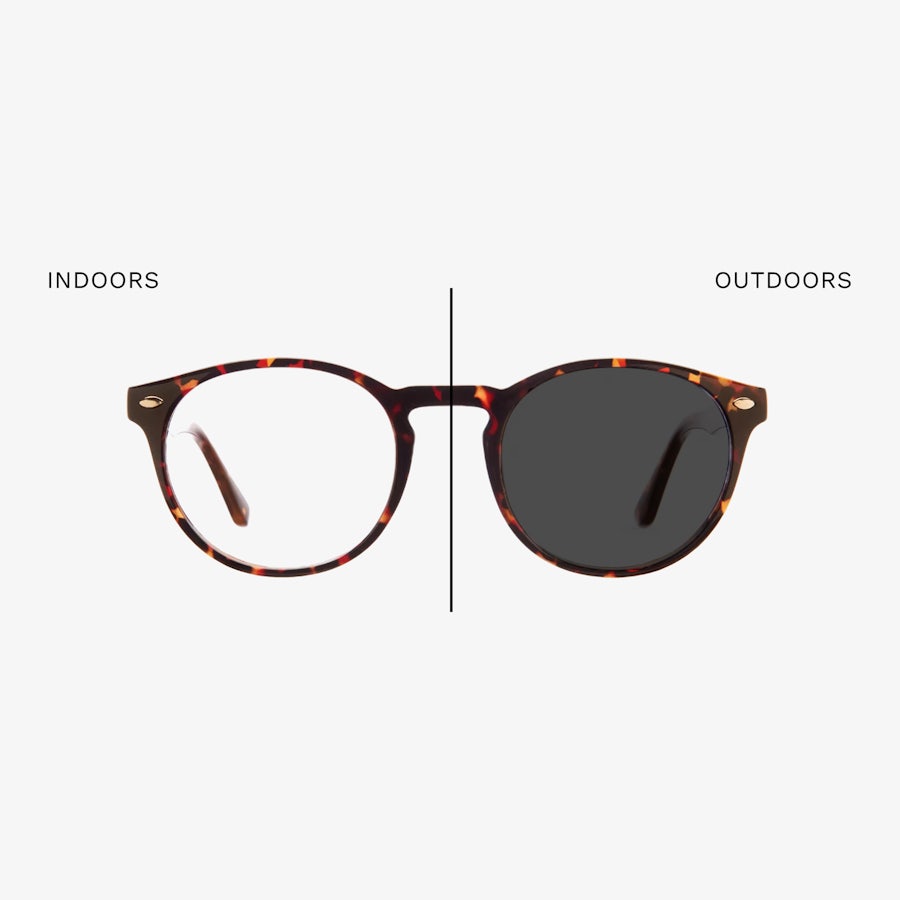
What are photochromic lenses?
Photochromic lenses are clear indoors and automatically darken outdoors within seconds. They adapt to changing light conditions to keep your eyes comfortable. Offering 100% UV protection while helping to filter blue-violet light from both sunlight and everyday digital sources.
What Does 'Photochromic' Actually Mean?
The word photochromic comes from two Greek roots: photos, meaning light, and chroma, meaning colour. A photochromic lens is therefore simply a lens that changes colour in response to light. For prescription eyewear, this means lenses that automatically darken when exposed to ultraviolet (UV) light. Then return to clear when the UV is removed.
Photochromic lenses may also be described as transition lenses, light reactive glasses, reactolite glasses, or auto-tinting lenses. All of these terms refer to the same underlying technology. 'Transitions®' is in fact a brand name. The most widely recognised manufacturer of photochromic lenses But the technology itself belongs to no single company.
Our Photochromic Lens Options
Adaptions®
Premium quality photochromic lenses - From £45.00
Adaptions® is our own brand of light reactive glasses, engineered to adapt smoothly to any lighting condition. It darkens quickly outdoors and clears reliably indoors, making it an outstanding choice for everyday wear. Especially if you are looking for a value-driven alternative to branded transition glasses.
- 100% UVA and UVB protection
- Blue light filtering
- Fast darkening and fade-back speeds
- Available as single vision and varifocal
- Premium quality at a lower price point
Available tints: Grey | Brown
Transitions® GEN S™
The latest in photochromic lens technology - From £80.00
Transitions® Signature® GEN S™ represents the very latest in photochromic technology. Engineered for faster activation, quicker fade-back to clear, and superior optical clarity at every stage. GEN S™ is the choice for those who are looking for the very best from their light reactive glasses.
- 100% UVA and UVB protection
- Advanced blue light filtering
- Faster activation than previous generations
- Enhanced fade-back speed indoors
- Exceptional clarity at every light level
Available tints: Grey | Brown

The Science: How Photochromic Lenses Work
The first photochromic lens was developed in the 1960s. They were made of glass containing microscopic silver halide crystals.
When ultraviolet light struck these crystals, a chemical reaction converted colourless silver ions into elemental silver. This is visible and therefore darkened the lens. When the UV light was removed, the reaction reversed and the lens returned to clear.
Glass photochromic lenses remained the standard for many years, but they had significant drawbacks. They were heavy, prone to shattering, and the tint was uneven across lenses of varying thickness. A particular problem for prescription wearers with stronger corrections.
Modern photochromic lenses
Today's photochromic lenses are almost universally made from polycarbonate or plastic resin, infused with organic (carbon-based) photochromic molecules, typically naphthopyrans and oxazines. These molecules work in a very different way to the silver-based early photochromic lenses.
When ultraviolet light makes contact with the lens, it triggers a structural rearrangement within these molecules. Their bonds break and reform into a new configuration that absorbs a much greater proportion of visible light. This causes the lens to darken. Multiplied across millions of molecules, the cumulative effect is a dramatic and visible tint.
When the UV source is removed, such as when you step indoors. The molecules gradually revert to their original transparent state, and the lens clears. This process is entirely reversible and happens automatically throughout the life of the lens.
The photochromic molecules in modern plastic lenses are embedded throughout the surface of the lens. This ensures consistent tint regardless of prescription strength or lens thickness.
How temperature affects photochromic performance
Temperature has a big and often misunderstood effect on how photochromic lenses perform. The fade-back to clear is a thermal process meaning warmth accelerates it, and cold slows it down.
In hot weather, lenses may not darken as deeply as they would in cooler conditions. This is because the thermal energy is already pushing the molecular reaction in the clearing direction.
In cold weather, such as during winter walks or skiing. Lenses can achieve a very deep, dark tint, but they will take noticeably longer to clear once you come indoors. This is a recognised characteristic of the technology, not a fault.
- Hot conditions (above 25°C): lenses may not reach full darkness in direct sun
- Cold conditions (below 10°C): lenses darken deeply but take longer to clear indoors
- Ideal performance: moderate temperatures, 10 to 20°C
Why UV Protection Matters, the Eye Health Case
One of the most important benefits of photochromic lenses is their continuous protection against harmful UV rays. Unlike regular clear lenses, photochromic lenses block 100% of UVA and UVB rays at all times. Regardless of whether they are clear or tinted they will be protecting your eyes.
This matters because ultraviolet radiation from sunlight accumulates over a lifetime. The damage is cumulative and largely irreversible. Long-term UV exposure to the eyes is a leading cause of the following conditions:
- Cataracts, clouding of the eye's natural lens. This is the leading cause of blindness worldwide, which is directly linked to cumulative UV exposure.
- Age-related macular degeneration (AMD), a major cause of permanent vision loss in adults over 55. With no current cure.
- Photokeratitis, essentially sunburn of the cornea; painful and temporarily debilitating, caused by intense short-term UV exposure.
- Pterygium, a growth of tissue across the cornea, linked to chronic sun exposure, which can distort vision.
- Squamous cell carcinoma , a rare but serious cancer of the ocular surface, linked to UV radiation.
A lens that is dark but lacks UV filtration is more dangerous than no lens at all. Behind a dark tint, the pupil dilates to increase the amount of light able to enter the eye. This allows more UV radiation into the eye than it would receive in normal daylight. Light adaptive lenses eliminate this risk by providing UV protection continuously, even when fully clear.
Blue Light: What It Is and How Photochromic Lenses Help
Blue light is emitted by sunlight, LED lighting, and the screens of digital devices. This includes smartphones, tablets, and computers.
Unlike UV light, blue light is visible and penetrates deep into the eye, reaching the retina. Prolonged exposure, particularly from screens during close work, is associated with digital eye strain, headaches, dry eyes, and disrupted sleep patterns. Emerging research also suggests a possible link between blue light and long-term retinal damage.
Modern photochromic lens options, including our Adaptions® and Transitions® Signature® GEN S™, filter a significant proportion of blue light from both sunlight and indoor digital sources. This provides a degree of protection when lenses are tinted outdoors and when they are clear indoors, which makes them particularly relevant for people who spend long hours in front of screens.
Honest Advantages and Limitations
Photochromic prescription glasses suit the majority of wearers extremely well, but they are not without limitations. Here is an honest, balanced assessment.
| Advantages | Limitations |
|---|---|
| ✔ One pair replaces glasses and sunglasses | ✘ May not darken behind car windscreens |
| ✔ 100% UV protection, even when clear | ✘ Rarely reach the darkness of dedicated sunglasses |
| ✔ Filters blue light from sun & screens | ✘ Transition speed slows in cold temperatures |
| ✔ Reduces squinting and eye strain outdoors | ✘ Molecules degrade after 2 to 3 years |
| ✔ Available in single vision and varifocal | ✘ A residual light tint may develop indoors over time |
| ✔ More cost-effective than two separate pairs | ✘ Not ideal for extreme brightness (skiing, high altitude) |
| ✔ Fully automatic, no manual adjustments | ✘ Hot weather reduces maximum tint depth |
Photochromic Lenses and Driving: What You Need to Know
Transition glasses, how do they work in the car? This is one of the most common questions about photochromic lenses.
Standard photochromic lenses are activated by UV light. Modern car windscreens are laminated and specifically designed to block the vast majority of UV radiation. Both for driver safety and to prevent interior fading. Even on a bright sunny day, standard photochromic lenses will remain clear or lightly tinted when driving.
This is not necessarily a problem for most drivers. The windscreen itself provides UV protection. You are not directly exposed to unfiltered sunlight in the same way you would be outdoors. For comfort on very bright days, it is recommended to have a dedicated pair of driving prescription sunglasses or clip-on polarised lenses.
However, specialist photochromic lenses designed to respond to visible light (as well as UV) do exist. These will activate to a degree behind a windscreen.
Who Are Photochromic Lenses Best Suited To?
Photochromic lenses work exceptionally well for a wide range of wearers and lifestyles. They are particularly well suited to:
- Full-time prescription wearers who want a single, versatile pair for all conditions
- People who move frequently between indoor and outdoor environments during the working day
- Those who spend time outdoors walking, cycling, gardening, or doing sports in moderate light conditions
- Anyone who frequently forgets or loses a second pair of prescription sunglasses
- People with light sensitivity or photophobia, who benefit from automatic glare reduction
- Older adults, who face a higher cumulative risk of UV-related eye conditions
They are less ideal for:
- Drivers who rely on their lenses to tint while behind the wheel (standard lenses will not darken in a car)
- People regularly exposed to extreme brightness such as skiing, high-altitude trekking, beach environments. Where dedicated sunglasses with maximum tint are preferable
- Those who prefer the predictable, deep tint of a fixed sunglass lens at all times outdoors
How Long Do Photochromic Lenses Last?
The photochromic molecules within the lens do gradually degrade over time with repeated activation cycles and UV exposure. Most photochromic lenses perform reliably for two to three years before you may notice a reduction in their darkening. They may not reach the same depth of tint they achieved when new, or may take slightly longer to clear indoors.
This lifespan aligns broadly with the recommended time for an updated eye test. So most wearers replace their lenses at this natural point anyway. Keeping lenses clean, storing glasses in a case, and avoiding harsh chemicals will help maintain performance of your lenses. Refer to our guides how to care for your glasses and how to clean your glasses for further advice.
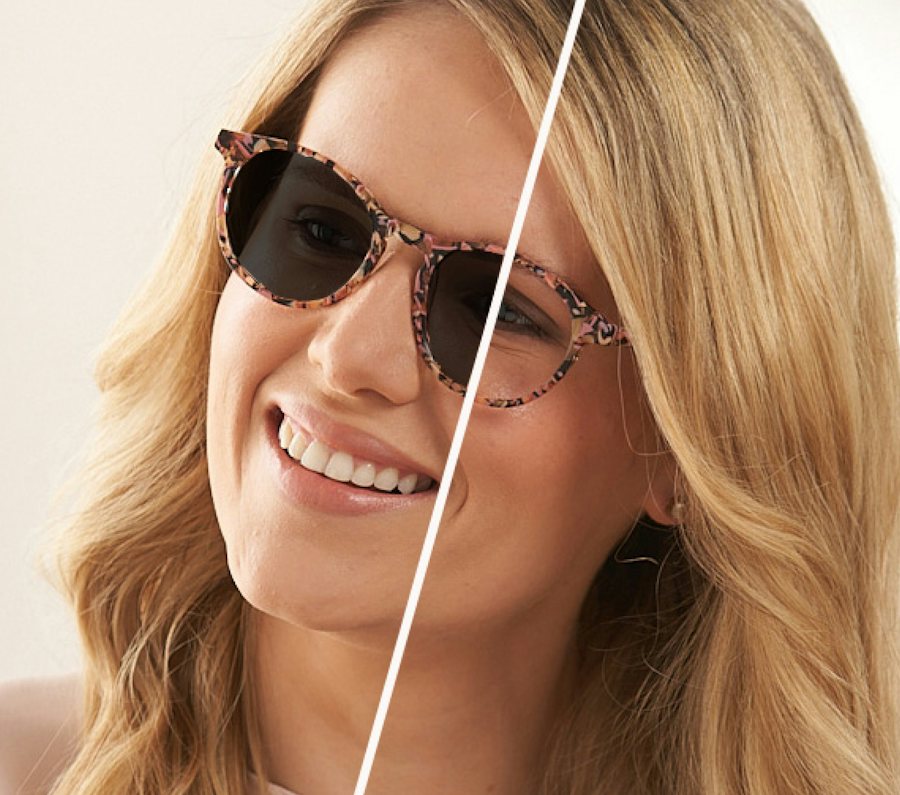
Direct Sight Photochromic Glasses
Customise any glasses frame with Adaptions® or Transitions® Signature® GEN S™ from only £45. Available with single vision and varifocal prescriptions and optional coating upgrades to reduce glare.
Related Categories
Frequently Asked Questions
What does photochromic mean?
The word comes from the Greek for light (photos) and colour (chroma). A photochromic lens changes colour in response to light. It darkens when exposed to ultraviolet radiation and returns to clear when the UV source is removed.
How do photochromic lenses actually work scientifically?
Modern photochromic lenses contain organic molecules, typically naphthopyrans and oxazines, embedded in the surface layer of the lens. When UV light strikes these molecules, it causes them to absorb more visible light, darkening the lens. When UV is removed, the molecules revert to their transparent state. The process is fully reversible and automatic.
Why do photochromic lenses not darken in the car?
Car windscreens are laminated glass designed to block UV radiation. The same light that activates standard photochromic lenses. Without UV reaching the lens, the photochromic molecules cannot trigger their darkening reaction.
Do photochromic lenses work on cloudy days?
Yes. UV radiation penetrates cloud cover effectively. On an overcast day in the UK, UV intensity can still reach 80% of clear-sky levels. Your photochromic lenses will still darken outdoors on cloudy days, though perhaps not to their maximum tint.
Why do my photochromic lenses not darken as much in summer?
Temperature plays a direct role in photochromic performance. The fade-back process is thermal, warmth accelerates clearing. In hot conditions, the thermal energy partially counteracts the UV darkening reaction, preventing lenses from reaching their maximum tint. This is expected behaviour, not a fault.
Do photochromic lenses protect against blue light?
Yes. Modern photochromic lenses (including our Adaptions® and Transitions® GEN S™) filter high-energy visible (HEV) blue light from both sunlight and digital screens. They offere protection when the lenses are clear or tinted.
Are photochromic lenses good for eye health?
Yes. 100% UVA and UVB protection they provide. Even when clear, they help guard against long-term UV-related conditions including cataracts, macular degeneration, photokeratitis, and pterygium. Because UV damage accumulates over a lifetime, this consistent protection is genuinely meaningful for long-term eye health.
How long do photochromic lenses last?
Most photochromic lenses perform well for two to three years before their darkening performance reduces. This aligns with the typical cycle for an eye test and prescription update for most wearers.
What is the difference between photochromic and polarised lenses?
Photochromic lenses automatically adjust their tint based on UV exposure. Polarised lenses have a fixed filter that blocks horizontally polarised light. The type responsible for glare from flat surfaces such as water, snow, and roads.
What are the alternatives to photochromic lenses?
The main alternatives are a dedicated pair of prescription sunglasses, clip-on tinted lenses that attach to existing frames. Photochromic lenses remove the need to manage multiple pairs of glasses. But dedicated sunglasses may be preferable for activities requiring maximum tint or reliable darkening while driving.
Are reactolite glasses the same as photochromic glasses?
Reactolite is a legacy brand name that was widely used in the UK to describe light-reactive prescription lenses. Today, the same technology is more commonly referred to as photochromic lenses, transition lenses, or light reactive glasses.
Modern lenses such as Adaptions® and Transitions® GEN S™ offer significantly faster reaction times. With clearer indoor performance, and more consistent tints. Making them far more suited to everyday wear.