
 Made in our UK lab · Next Day Delivery
Prism Lenses
What are they and do you need them?
Published by Direct Sight | Lens Centre
What Are Prism Lenses?
Standard prescription lenses correct how your eyes focus light, addressing short-sightedness, long-sightedness, or astigmatism. Prism lenses do something different: they correct how your eyes work together. They contain a specially shaped section within the lens that redirects light. This helps both eyes focus on the same point even when the eyes are slightly out of alignment.
The result is single, comfortable vision. Eliminating or reducing double vision, eye strain, and the persistent headaches that often accompany an uncorrected eye muscle weakness.
If your glasses prescription includes a number in the PRISM column, your optician has identified an eye muscle imbalance that needs correcting. Prism lenses are the solution, and at Direct Sight, adding prism correction to your prescription glasses costs just £25.00.
Why Are Prism Lenses Prescribed?
When your eye muscles work together correctly, both eyes focus on the same object and the brain combines the two images into a single clear picture. When there is a muscle imbalance, the eyes can become slightly misaligned. Light enters the eyes at different angles, causing the brain to receive two separate images instead of one.
Prism lenses correct the angle of incoming light, helping both eyes align on the same point so the brain can combine the images properly and eliminate double vision.
Over time this causes:
- Double vision (diplopia), seeing two images of a single object, side by side or one above the other
- Eye strain, persistent discomfort from the effort of maintaining alignment
- Headaches, particularly after sustained close work or screen time
- Reading difficulties, words appearing to move or merge on the page
Eye muscle imbalances can be present from birth or may develop later in life. Common causes include strabismus (squint), neurological conditions, stroke, head injury, diabetes, and migraines.
What Causes Double Vision?
Double vision is usually caused by movement problems with your eyes. This maybe caused by neurological issues as a result from a head injury, a stroke or a brain tumour. Another common cause or double vision is strabismus or eye turn, which causes one eye to move inwards or outwards.
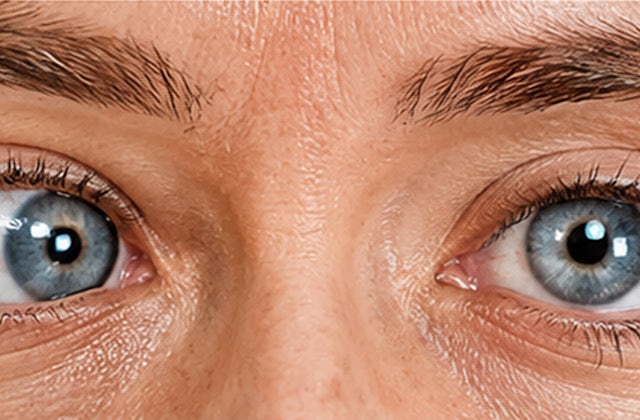
Esotropia
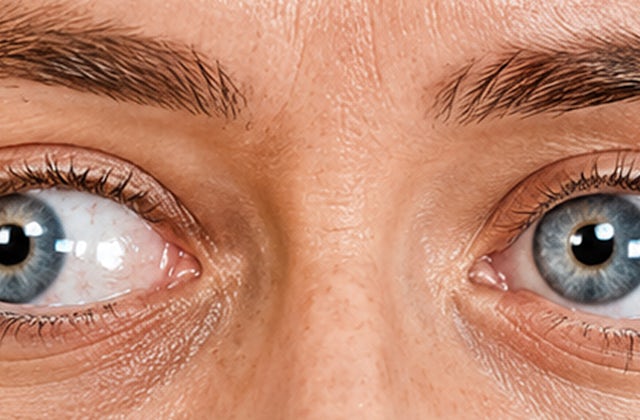
Exotropia
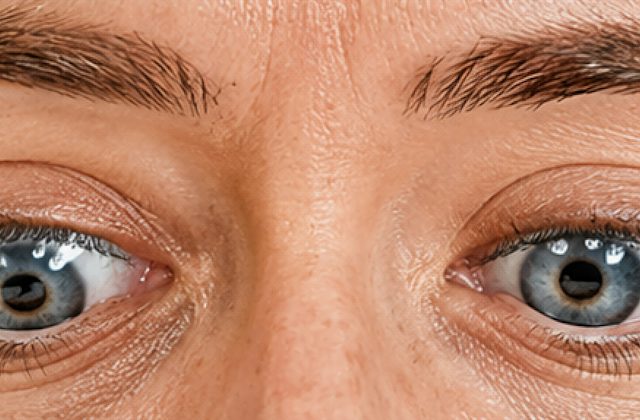
Hypotropia
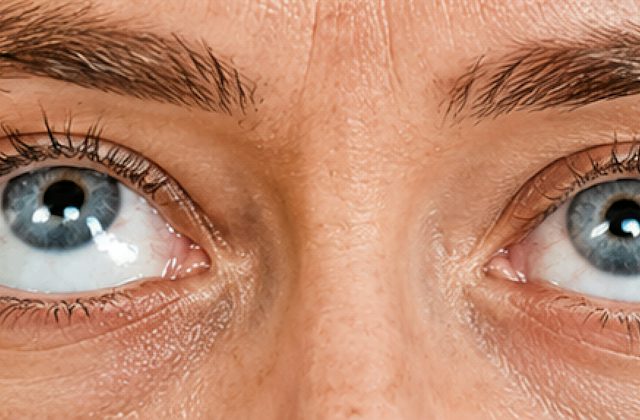
Hypotropia
Reading the Prism on Your Prescription
| Prescription | What it means |
|---|---|
| PRISM | A number here (measured in prism diopters, e.g. 1.5PD) indicates an eye muscle imbalance requiring correction |
| BASE | The direction of the prism, base In, Base Out, Base Up, or Base Down, tells the lab how to orient the prism within the lens |
| Which eye | Prism may be prescribed in one or both eyes; it is often split between both lenses to balance thickness and improve appearance |
What Do Prism Glasses Look Like?
Prism lenses look like ordinary prescription glasses. The prism is built into the lens material, there is nothing visible to see. One lens may be marginally thicker than the other depending on the direction and degree of correction. But for most prescriptions the difference is minimal.
Where prism values are higher, they can be split equally between both lenses. This balance thickness and improves the overall appearance.
Prism correction is available on all prescription glasses at Direct Sight for an additional charge of £25.00. Your prism values are glazed directly into your lenses in our own UK optical laboratory in Amersham, Buckinghamshire. Every pair undergoes a 7-point quality check before dispatch.
To order, enter your full prescription, including the PRISM and BASE values, when prompted at checkout. If you need help, our optical team is available on 01494 307 345 or at help@directsight.co.uk. All orders include a 365 day workmanship guarantee and a 30 day returns policy.

Shop Glasses Prism Glasses at Direct Sight
Related Categories
Frequently Asked Questions
What are prism lenses in glasses?
Prism lenses are prescription lenses that contain a wedge-shaped optical element ground into the lens. They bend incoming light so that both eyes receive an image from the same point, correcting a misalignment between the eyes. They do not improve focusing clarity (that's the job of the standard prescription power). They correct how the two eyes work together to produce a single, comfortable image.
How do I know if I need prism lenses?
Your optician will diagnose an eye muscle imbalance during a comprehensive eye examination. If prism correction is needed, a value will appear in the PRISM section of your prescription. This will always include a BASE direction, such as Base In, Base Out, Base Up, or Base Down.
Common symptoms that may prompt an optician to test for prism include double vision, persistent headaches, eye strain, or difficulty reading.
Will prism lenses cure my double vision?
Prism lenses correct double vision while you are wearing your glasses by realigning the light entering each eye. They are highly effective for managing the condition, but they address the symptom rather than the underlying cause. Some people wear prism lenses long term; others may use them temporarily while a neurological or muscular cause is investigated or treated. Your optician or ophthalmologist is best placed to advise on your individual case.
Do prism lenses weaken the eyes?
No. Prism lenses do not weaken the eyes. They act as a support for the eye muscles, like a brace for a strained muscle, relieving the effort required to maintain alignment. The eyes become more relaxed, not more dependent, as a result of appropriate prism correction.
What does the BASE direction mean on my prescription?
The BASE tells the lab which direction to orient the prism within the lens. 'Base In' means the thick edge of the prism sits toward the nose; 'Base Out' toward the temple; 'Base Up' and 'Base Down' orient the prism vertically. The base direction determines which way the lens deflects light to compensate for your specific eye misalignment.
Can prism be added to any prescription?
Yes. Prism correction can be added to single vision, varifocal, and bifocal prescriptions at Direct Sight. It is compatible with all lens materials in our range, including high index lenses. The £25.00 prism charge applies to all prescription types.
Can prism correction be split between both lenses?
Yes, and this is often recommended for larger prism values. Splitting the prism equally between both lenses reduces the thickness difference between them and improves the overall appearance and comfort of the glasses.
Your prescription will indicate whether the prism should be in one or both lenses; if it is in both, enter each value and BASE direction separately at checkout. If you are unsure how to enter the details only we strongly advise uploading a copy of the prescription.
How much does it cost to add prism to glasses at Direct Sight?
Prism correction costs £25.00 as a flat addition to your prescription at Direct Sight. Applied regardless of prism strength or whether correction is required in one or both lenses. All prism lenses are glazed in our own UK optical laboratory and include the same 365 day workmanship guarantee and 30 day returns policy as standard orders.
Will my prism glasses look different from normal glasses?
In most cases, no. Prism is ground into the lens as part of the standard glazing process. The glasses look like any other pair of prescription glasses.
One lens may be slightly thicker than the other depending on the prism direction and degree. This difference is often minimal and can be reduced further by choosing a full-rim frame or upgrading to a higher index lens material.