
 Made in our UK lab · Next Day Delivery

Single vision lenses and how they work
Single vision lenses are the most common type of prescription lens. From distance glasses lenses to reading glasses lenses. This guide outlines everything you need to know for single vision lenses, UK online ordering from Direct Sight.
Published by Direct Sight | Lens Centre
What are single vision lenses?
Single vision lenses have one prescription power applied consistently across the entire lens. They correct vision at a single distance, either near, intermediate, or far. Making them the simplest and most widely prescribed lens type in the UK.
If you are short-sighted (myopic) and struggle to see objects in the distance clearly. Your optician will prescribe distance single vision lenses. If you are long-sighted (hyperopic) and find close work difficult, reading single vision lenses are the solution. If you spend long hours at a computer or desk, intermediate single vision lenses correct vision at arm's length.
Basic single vision prescription lenses are included free with every Direct Sight frame order. Single vision, bifocals or varifocals are all made to your exact prescription at our UK facility in Amersham, Buckinghamshire. We use the same professional glazing process as a high street optician, at a fraction of the price.
How to tell from your prescription if you need single vision lenses
If your prescription only has a SPH value (plus or minus) and no ADD, you need single vision lenses.
If you have an ADD value on your prescription, this indicates a need for separate near and distance corrections. In this case varifocal (progressive) lenses or a separate pair of distance and reading glasses would be required. If you are unsure, contact us at help@directsight.co.uk and our optical team will advise.
Distance, reading, and intermediate, which do you need?
Distance
For short-sighted (myopia)
Driving · TV · Sport · Everyday
- Helps you see clearly in the distance
- Most common prescription (SPH shows a − value)
- Worn full-time by most users
- Not suitable for reading (some people remove them for close-up tasks)
Intermediate
Computer / arm's length
Screens · Desk work · Hobbies
- Ideal for computer use
- Helps when reading glasses feel too weak and distance glasses too strong
- Often paired with blue light protection
- Growing in popularity due to screen use
Reading
For long-sighted (hyperopia)
Books · Phones · Close tasks
- Designed for close-up focus
- SPH shows a + value
- Common from mid-to-late 40s
- Worn only when reading or doing near work
Can single vision lenses correct astigmatism?
Single vision lenses can correct astigmatism alongside short-sightedness or long-sightedness.
A CYL value indicates astigmatism, and it will always come with an AXIS. Both will be included in your single vision lenses. Simply provide your full prescription, including SPH, CYL, and AXIS, when ordering.
Single vision lens index, how thin should your lenses be?
The refractive index of a lens determines how thin the lens can be made while still correcting your prescription. A higher index means a thinner, lighter lens, but generally a higher cost.
The lens index you need is determined by the strength of your prescription.
| Lens index | Prescription range (SPH) | Thickness vs standard | Best suited to |
|---|---|---|---|
| 1.50 (Standard Index Lens) | Up to ± 2.50 | Standard | Low to mild prescriptions. Most affordable option. Works with all full-rim frames. |
| 1.60 (Thin Index Lenses) | ±2.50 to ±4.00D | 20% thinner | Moderate prescriptions. Good balance of thickness, weight, and cost. |
| 1.67 (Extra Thin Index Lenses) | Above ±4.00 | 33% thinner | Strong prescriptions. Noticeably slimmer and lighter. Aspheric design reduces distortion. |
Single vision lens option - coatings and add-ons
A range of coatings and treatments can be added to single vision lenses to enhance comfort and durability. Here is what each one does:
Anti-reflective (AR)
Reduces glare and reflections
Cuts reflections from screens, overhead lighting, and headlights. Essential for driving at night and all-day screen use. Makes your lenses appear cleaner and lets others see your eyes clearly rather than a reflection.
Scratch-resistant
Protects lens surfaces
Hardens the lens surface to resist everyday scratches from cleaning, storage, and handling. Does not make lenses scratch-proof, but significantly extends their lifespan.
UV protection
Filters out harmful UVA and UVB radiation. UV400 protection comes as standard with our 1.5 MAR, 1.6 high index and 1.67 high index lens packages Important for anyone spending significant time outdoors.
Blue light filtering
A coating that reduces the amount of high-energy blue light reaching the eyes from screens and LED lighting. Evidence for benefit is mixed, but many people report reduced eye fatigue during long screen sessions. Available as an add-on to single vision lenses.
Photochromic
Lenses that darken automatically in sunlight and return to clear indoors. Highly convenient for those who move frequently between indoor and outdoor environments. Note: standard photochromic lenses may not darken fully in a car.
Tinted lenses
A permanent sunglass tint, available in grey, brown, or green, applied to single vision prescription lenses. Turns any frame into prescription sunglasses. Grey is colour-neutral; brown enhances contrast; green is popular for outdoor sport.
Single vision lenses vs varifocal lenses - Which is right for you?
| Feature | Single vision | Varifocal (Progressive) lenses |
|---|---|---|
|
Corrects |
Once distance - near, intermediate or far | All distances, near, intermediate, and far in one lens |
| Who for | Typically under-40s; anyone needing one distance only; all ages for reading | Typically over-40s needing multiple distances; anyone with presbyopia |
| Field of view | Full, uninterrupted vision across the entire lens | Narrower corridor of clear vision; requires head movement to adjust |
| Adaptation | Usually immediate, no adjustment period needed | Takes days to weeks to adapt to the zones |
| Cost | Lower, standard included free with Direct Sight frames | Higher, specialist glazing required |
| Appearance | Uniform lens, no visible lines | No visible lines (unlike bifocals) |
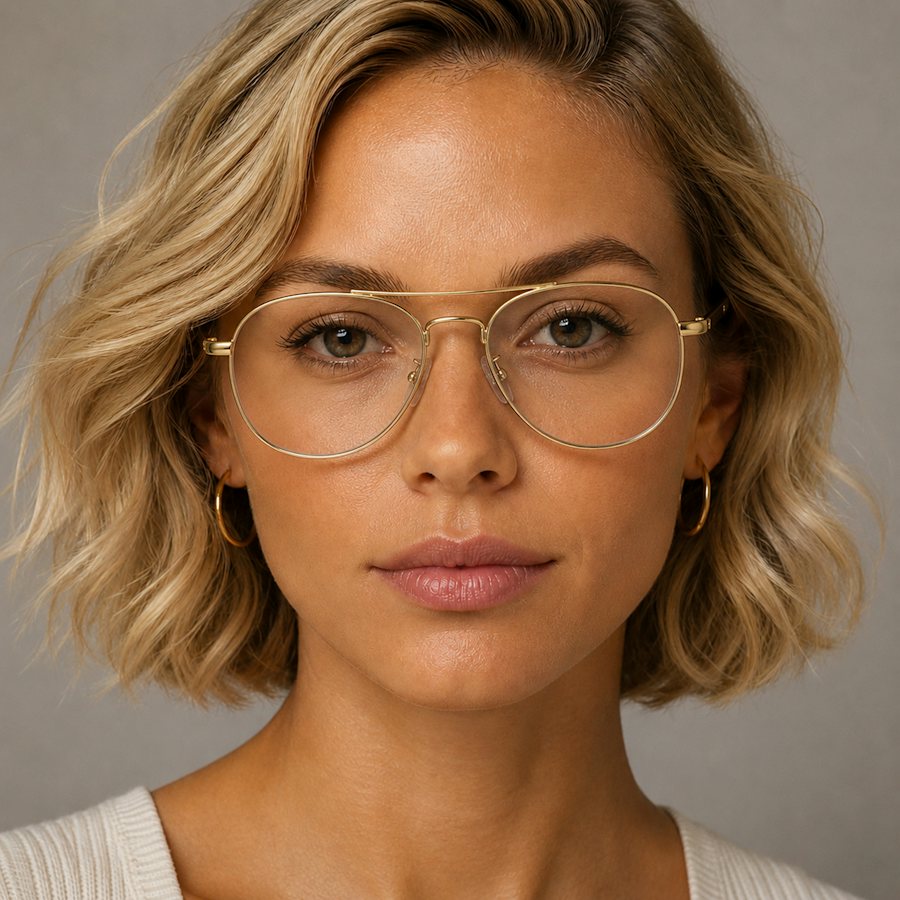
Shop Single Vision Glasses
Browse our range of frames and customise with your prescription lenses.
Related Categories
Frequently Asked Questions
What are single vision lenses?
Single vision lenses are prescription lenses with one correction power across the entire lens surface. They correct vision at a single distance, near, intermediate, or far. They are the most common type of prescription lens in the UK.
They are suitable for people who need vision correction for distance, reading or intermediate use. They can also correct astigmatism. At Direct Sight, basic single vision lenses are included free with every prescription frame order.
What is the difference between single vision distance glasses and reading glasses?
A pair of glasses for distance single vision glasses correct short-sightedness (myopia). They help you see clearly in the distance for driving, watching TV or playing sport. They are not designed for reading. Your prescription will have a minus (−) value in the SPH column.
Reading single vision glasses correct long-sightedness (hyperopia) and age-related near vision loss (presbyopia). They are designed for close tasks like reading, phone use and sewing. Your prescription will have a plus (+) value in the SPH column.
Both are single vision lenses, the prescription simply points the lens correction at a different focal distance.
Can single vision lenses correct astigmatism?
Yes. Single vision lenses routinely correct astigmatism alongside short-sightedness or long-sightedness. If you have astigmatism your prescription will have a Cylinder (CYL) and an Axis value. When ordering from Direct Sight, just provide your full prescription (SPH, CYL, and AXIS) and our team will handle the rest.
What lens index do I need for my single vision prescription?
Lens index determines how thin your lenses are. The right index depends on the strength (SPH value) of your prescription.
1.50 standard index suits prescriptions up to ±2.50
1.60 thin index suits ±2.50 to ±4.00 and is approximately 20% thinner
1.67 extra-thin suits ±4.00 and above and is around 33% thinner
If your prescription is below ±2.50D, standard lenses look perfectly fine in most frames. The higher indexes become important for aesthetics and comfort when prescriptions get stronger.
Are single vision lenses right for me if I am over 40?
If you start having trouble reading or focusing up close, you may need a separate pair of single vision reading glasses. These would be needed alongside your distance glasses. If switching between two pairs becomes inconvenient, varifocal (progressive) lenses offer a combined solution.
What is intermediate vision and do I need single vision lenses for it?
Intermediate vision refers to the middle distance, roughly arm's length, or 50 to 80 centimetres. This is the distance of a computer screen or a music stand.
People often find that their reading prescription is too strong for screen distance, while their distance glasses are not strong enough. Intermediate single vision glasses solve this by correcting vision at exactly the screen distance. They are popular as a dedicated desk or office pair for people who spend significant time at a computer. Your optician can prescribe an intermediate lens specifically.
How long do single vision lenses take to make at Direct Sight?
Single vision glasses are typically made and dispatched within 3 to 7 working days.
For eligible frames and single vision prescriptions, our Next Day Express service is available as an upgrade. Orders placed before 3pm Monday to Friday are made and dispatched the same day. Prescriptions with higher complexity, including some CYL values or specialist coatings, may require additional production time. For production and delivery timescales for full details.
Can I wear single vision glasses all the time?
Yes, if your single vision lenses are prescribed for your primary daily vision task. Short-sighted people typically wear their distance single vision glasses full-time throughout the day.
There is no harm in wearing single vision glasses for long periods of time. The myth that wearing glasses 'worsens' your eyesight is not supported by clinical evidence. Your prescription changes naturally over time regardless of whether you wear glasses or not.
What coatings are recommended for single vision lenses?
Anti-reflective (AR) coating is the most recommended add-on for single vision lenses. It significantly reduces glare from screens and headlights and is particularly valuable for drivers and office workers.
For screen-heavy users, blue light filtering is available as an add-on. For sun protection photochromic treatment is convenient as lenses adapt automatically between clear indoors and tinted outdoors. All coatings are compatible with single vision lenses in all index levels.
What is the difference between single vision lenses and varifocal lenses?
Single vision lenses contain one prescription that corrects vision at one distance, near, intermediate, or far. Varifocal lenses (also called progressive lenses) contain a gradient of prescriptions within a single lens. They correct near, intermediate, and distance vision simultaneously.
Basic single vision lenses are included free with Direct Sight frames. Varifocals are available as an upgrade.
Where can I buy single vision prescription glasses in the UK?
Direct Sight offers single vision prescription glasses made in the UK at our Amersham, Buckinghamshire laboratory. Our frames start from £9.00 including single vision lenses. With a range of lens index options, coatings, and add-ons available at checkout.
We accept all standard single vision prescriptions including those with CYL and AXIS values for astigmatism. Orders come with a 30 day no-quibble return policy, free exchanges, and a 365 day workmanship guarantee.
We offer a range of helpful guides covering everything from face shapes to understanding your prescription. Designed to make buying glasses online simple and straightforward.